
Electric vehicles are already at 800V—is there really a need to push them all the way to 1200V?
Source: WeChat Official Account “Frey Liu”
Is 1200V the Next Frontier or Just Marketing Overkill?
The Core Debate: Why the 800V “Sweet Spot” is Enough
The EV industry is currently locked in a high-voltage arms race. While we’ve shifted from 400V to 800V/900V, some are already pushing for 1200V platforms.
My Take: The performance dividends from the 800V transition are far from exhausted. Rushing to 1200V before solving existing cost and infrastructure hurdles is more about “tech-flexing” than improving the user experience. It will inevitably drive up costs with diminishing returns.
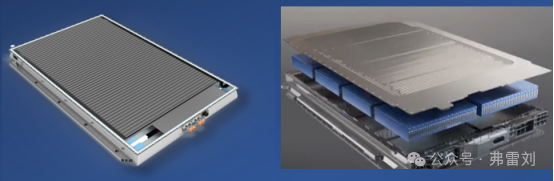
Left: Previous long blade battery system; Right: 800V megawatt battery system
1. Battery Complexity: The “Serial Number” Trap
To hit higher voltages, you must increase the number of cells in a series.
The Math: For an 800V-900V system, NCM batteries require ~200 cells in series. For LFP (Lithium Iron Phosphate), which has lower cell voltage, a car like the BYD Han L requires 264 cells in series.
The Trade-off: Traditionally, larger cells reduce costs by requiring fewer structural components and connections. Higher voltage forces the use of smaller cells (or more complex configurations), increasing Internal Resistance and system complexity.
The Consistency Risk: More cells mean stricter requirements for cell consistency. The “Bucket Effect” applies here: the weakest cell dictates the entire pack’s performance. Moving to 1200V complicates thermal management and safety for no clear functional gain.
2. Diminishing Returns in Heat & Efficiency
The classic formula P = I2R tells us that doubling voltage halves the current, reducing heat loss by 75%.
400V to 800V: A massive leap. Heat loss drops to 1/4.
800V to 1200V: Current drops to 1/3, and heat loss drops to 1/9.
While there is an improvement, the marginal benefit is shrinking. While higher voltage allows for lighter, thinner copper busbars (vital given rising copper prices), the weight and cost savings at 1200V are significantly less impactful than the initial jump to 800V.


3. The “Megawatt” Charging Illusion
We are already seeing 5C charging (10%-80% in ~11 minutes) on 800V platforms like CATL’s Kirin or Shenxing batteries.
Infrastructure Reality: 500kW+ chargers are rare in urban centers. Even when available, power-sharing between adjacent stalls often prevents hitting peak speeds.
The 1200V “Benefit”: A 10C “Megawatt” charge sounds twice as fast, but in reality, it only shaves about 3 minutes off a charge (8 mins vs 11 mins). Due to lithium plating boundaries and electrochemical limits, 10C peaks can only be sustained for a very short window.
The Verdict: 11 minutes is fast enough for most. 8 minutes is a “nice-to-have” luxury that doesn’t justify the massive infrastructure and battery stress.
4. The Hidden Costs: Semiconductors & Insulation
Every jump in voltage requires a new generation of expensive hardware:
SiC Semiconductors: 800V systems rely on Silicon Carbide (SiC) for efficiency. Moving to 1200V pushes SiC requirements to a higher tier, spiking the cost of Inverters, OBCs, and DC-DC converters.
Insulation Challenges: Higher voltage increases the risk of corona discharge and insulation breakdown.
Creepage distances and clearances must be wider.
Motor winding insulation must be thickened.
Relays, fuses, and contactors must be rated for 1000V+ arc-extinguishing capabilities.
BMS sampling accuracy must be significantly higher.
Summary: Is 1200V Worth It?
In engineering, the goal is to find the optimal solution within constraints.
Currently, 800V-900V provides more than enough power, efficiency, and charging speed for the modern consumer. Moving to 1200V increases system complexity, raises costs, and potentially lowers energy density due to added insulation and smaller cell packaging.
Conclusion: 1200V is a race to win on a spec sheet, not on the road. We should focus on perfecting the 800V ecosystem rather than chasing numbers for the sake of “winning.”
Disclaimer: This article was written in my personal spare time and does not represent the views of any organization or institution.
Due to the limited knowledge and English level, inevitable errors and omissions will occur. If there are errors or infringements of the text, please contact me as soon as possible by private letter, and I will immediately correct or delete them.
Powering Precision: Test your battery performance with Neware.