
1. What is High Power Pulse Characterization (HPPC)?
The HPPC test (High Power Pulse Characterization) is a specialized diagnostic protocol used to quantify the dynamic power capabilities of a battery system. Unlike standard constant-current tests, the HPPC method subjects the battery to high-intensity current pulses to simulate aggressive real-world demands, such as rapid acceleration or regenerative braking in electric vehicles (EVs).
Core Objectives of HPPC Testing:
Dynamic Response Mapping: Understanding how voltage drops under sudden loads.
Parameter Identification: Providing essential data for building equivalent circuit models (ECM).
Efficiency Analysis: Identifying energy loss through internal resistance across various States of Charge (SOC).
2. Technical Principles: How the HPPC Test Works
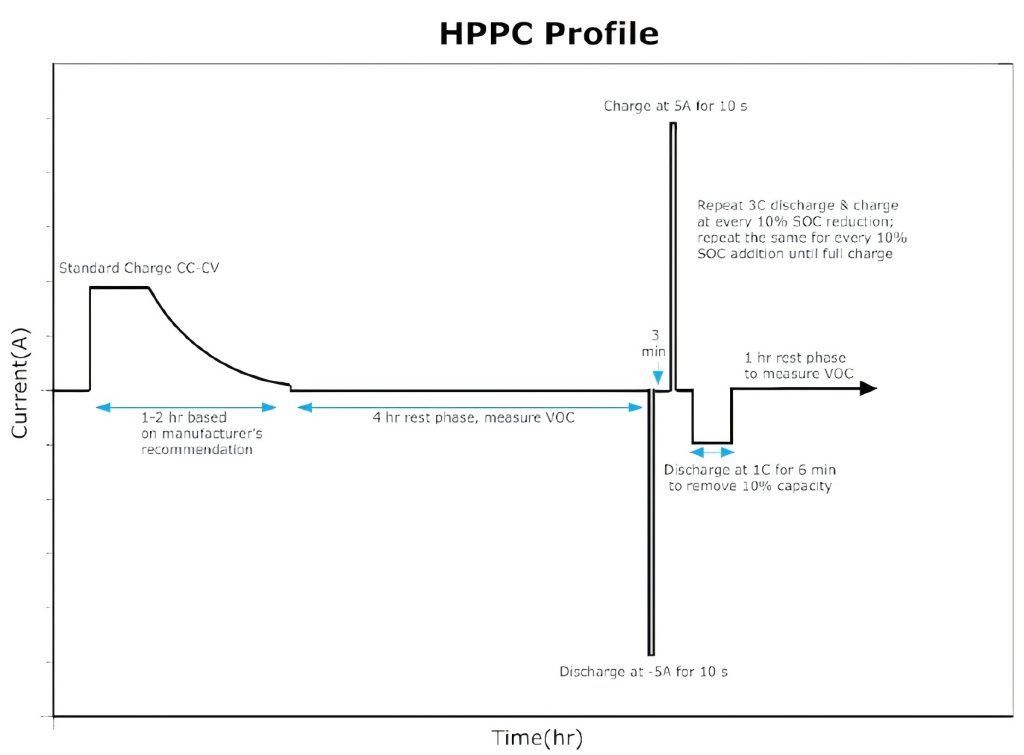
In modern energy storage applications, batteries rarely discharge at a steady rate. The HPPC test replicates these fluctuations by applying a programmed sequence of discharge and charge pulses.
Key Metrics Captured:
DC Internal Resistance (DCIR): This is the calculated resistance derived from the voltage change (Delta V) divided by the current change (Delta I). It is a critical indicator of a battery’s thermal efficiency.
Pulse Power Capability: This determines the maximum wattage a battery can safely deliver or absorb for short durations (typically 10 seconds) without violating voltage limits.
Voltage Relaxation: Analyzing how quickly a battery stabilizes after a pulse, which offers insight into its electrochemical polarization.
3. Why HPPC Testing is Essential for Battery R&D
For manufacturers and researchers, the HPPC test is more than just a measurement; it is a predictive tool.
BMS Algorithm Optimization: Data from HPPC tests allows engineers to calibrate Battery Management Systems (BMS) to accurately estimate the “Power Limit” in real-time.
Degradation Tracking: As batteries age, their internal resistance increases. Regular HPPC testing helps quantify “Power Fade,” which is often a more critical failure metric than simple capacity loss.
Thermal Management: By measuring DCIR, engineers can calculate heat generation (Q = I2R), ensuring the cooling system is adequately designed.
4. Why Industry Leaders Choose NEWARE for HPPC Testing
Precision is non-negotiable when measuring millisecond pulse responses. NEWARE Battery Testing Systems are engineered to handle the complexities of the HPPC test with industry-leading reliability.
High-Speed Data Acquisition: NEWARE equipment captures high-frequency data points, ensuring the initial “IR Drop” is recorded accurately without missing the peak.
Programmable Flexibility: Users can easily script complex HPPC profiles that include specific SOC steps, rest periods, and temperature triggers.
Robust Stability: Whether testing a small coin cell or a massive EV pack, NEWARE ensures consistent current delivery and minimal noise in the results.
Revolutionize Your HPPC Testing with the Neware BTS 6000 Pro Series
Precision and speed are the cornerstones of advanced EV battery research. The Neware CE-6016-Pro-5V100A is engineered to meet the rigorous demands of next-generation cell characterization. With a 16-channel configuration and an ultra-high accuracy of ±0.02% FS, this system delivers the data integrity required for critical R&D.
Why settle for standard when you can achieve excellence in HPPC testing?
- Rapid Dynamics: Achieve a current response time of ≤1ms and a seamless conversion time of ≤2ms (from -90% to 90% FS).
- High-Speed Insights: A 200Hz recording frequency combined with a 10ms minimum pulse width ensures you never miss a transient voltage drop.
- Scalable Power: Need higher current? Support for 8-channel parallel mode allows you to scale up effortlessly for high-power applications.
From drive cycle simulations to complex pulse characterization, the BTS 6000 Pro is the ultimate tool for EV battery innovation.
5. Compliance with International Testing Standards
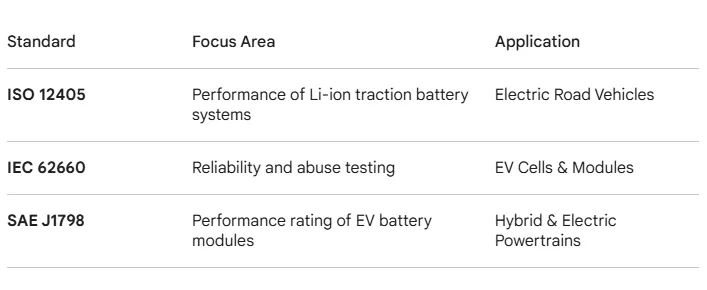
To ensure global market access, the HPPC test must be performed according to established regulatory frameworks:
6. Step-by-Step: How to Conduct an Effective HPPC Test
Soaking & Thermal Equilibrium: Place the battery in a temperature-controlled chamber to ensure the core temperature is uniform.
SOC Adjustment: Discharge the battery to the target SOC level (e.g., 90%, 80%, etc.).
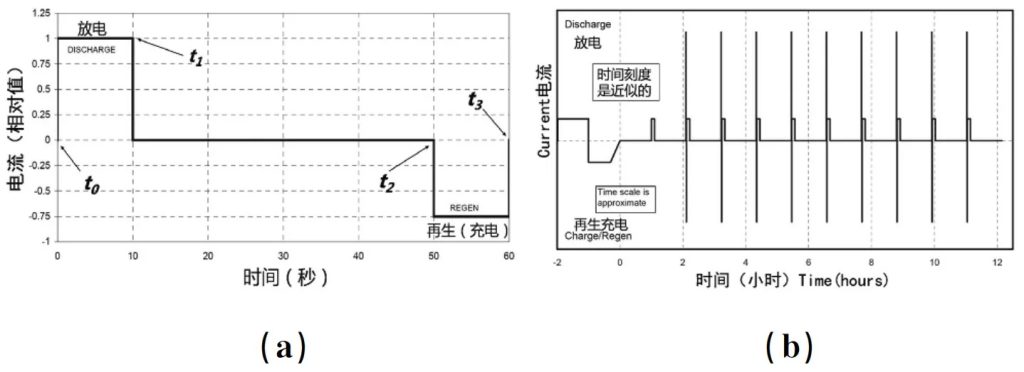
Pulse Application: Execute a high-current discharge pulse, followed by a short rest, and then a charge pulse (regen pulse).
Data Extraction: Record the voltage at t0 (pre-pulse), t1 (end of pulse), and t2 (post-relaxation).
7. Frequently Asked Questions (FAQ)
How long does an HPPC test typically take?
Depending on the number of SOC increments (e.g., every 10% SOC), a full HPPC testing cycle can take between 12 to 24 hours to allow for proper thermal stabilization at each step.
What is the difference between HPPC and a standard DCIR test?
While both measure resistance, the HPPC test is a comprehensive characterization that maps both discharge and charge pulse power across the entire SOC range, whereas a DCIR test is often a single-point measurement.
Why is temperature control critical during HPPC?
Battery resistance is highly sensitive to temperature. Even a 2℃ fluctuation can significantly alter the DCIR results, making precise environmental chambers a requirement for valid data.
8. Application Scenarios of HPPC Testing
(1) Performance Evaluation of Hybrid Electric Vehicle (HEV) Battery Systems: HPPC testing assesses the power performance and durability of battery systems specifically for hybrid vehicles, helping engineers understand and optimize battery behavior under real-world operational demands.
(2) Assessment of Battery Modules and Cells: By conducting HPPC tests on individual cells and modules, manufacturers can precisely measure power output and charging efficiency at various Depths of Discharge (DOD). This data is critical for structural battery design and chemical optimization.
(3) Guiding Battery Management System (BMS) Development: The data derived from HPPC testing enables the BMS to monitor and control battery states more effectively, ensuring operation remains within safe and economical limits. Furthermore, it provides the necessary empirical data to build high-fidelity battery models and accurate model parameters, which are essential for precise BMS state estimation.
(4) Battery State Estimation: HPPC testing facilitates a deeper understanding of battery performance across diverse operating conditions, providing vital data points for the design and optimization of electric vehicle energy management.
(5) Powertrain Design and Battery Life Management: The results of HPPC tests are used to define power-assist targets and evaluate discharge and regenerative charging pulse power capabilities at various DOD levels. This is significantly important for powertrain integration and long-term battery cycle-life management.
(6) Evaluating Key Performance Metrics: By simulating pulse charge/discharge cycles at different States of Charge (SOC), the HPPC test evaluates critical characteristics such as power performance, Open Circuit Voltage (OCV), and Direct Current Internal Resistance (DCIR). Typically, the test involves discharging the battery in 10% DOD increments, with 1-hour rest periods between pulses, spanning from 0% to 100% DOD.
(7) Comprehensive Battery State Analysis: During testing, the DCIR for both charging and discharging directions—as well as the OCV—can be measured at specific SOC points. These datasets provide a granular view of battery performance, serving as a cornerstone for EV powertrain optimization.
(8) Battery Life Prediction: HPPC testing helps determine power-assist thresholds and evaluate pulse power capabilities throughout the battery’s life cycle. This plays a vital role in predicting degradation trends and managing the overall health of the propulsion system.
Conclusion: As demonstrated by these scenarios, the HPPC test is an indispensable component of power battery research, technological advancement, and high-quality product development.