
Official Unveiling of BYD’s Second-Generation Blade Battery: 8 Key Technical Highlights
On March 5, 2026, BYD officially unveiled its Second-Generation Blade Battery, marking a heavyweight technological iteration for the industry. This advancement goes beyond mere incremental parameter gains; more importantly, through innovative material science, it simultaneously addresses core industry pain points—charging speed, cruising range, and low-temperature performance—effectively narrowing the user experience gap between Battery Electric Vehicles (BEVs) and traditional Internal Combustion Engine (ICE) vehicles.
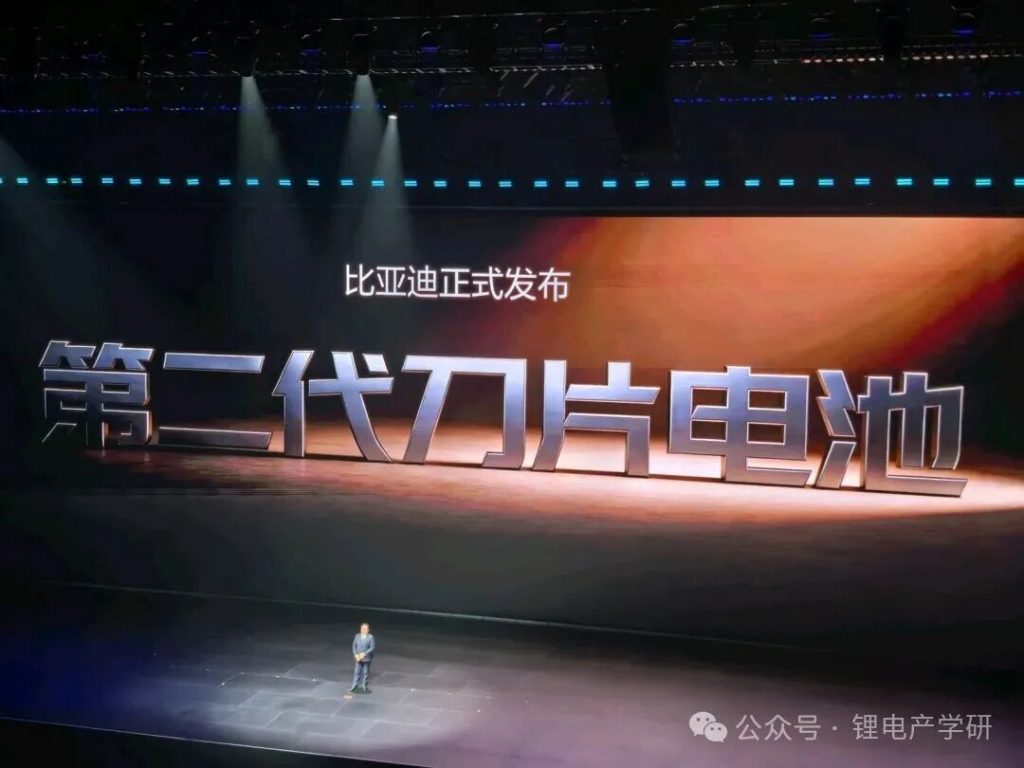
BYD Second-Generation Blade Battery: 8 Core Technical Highlights
1. Charging Performance (C-rate Capabilities)
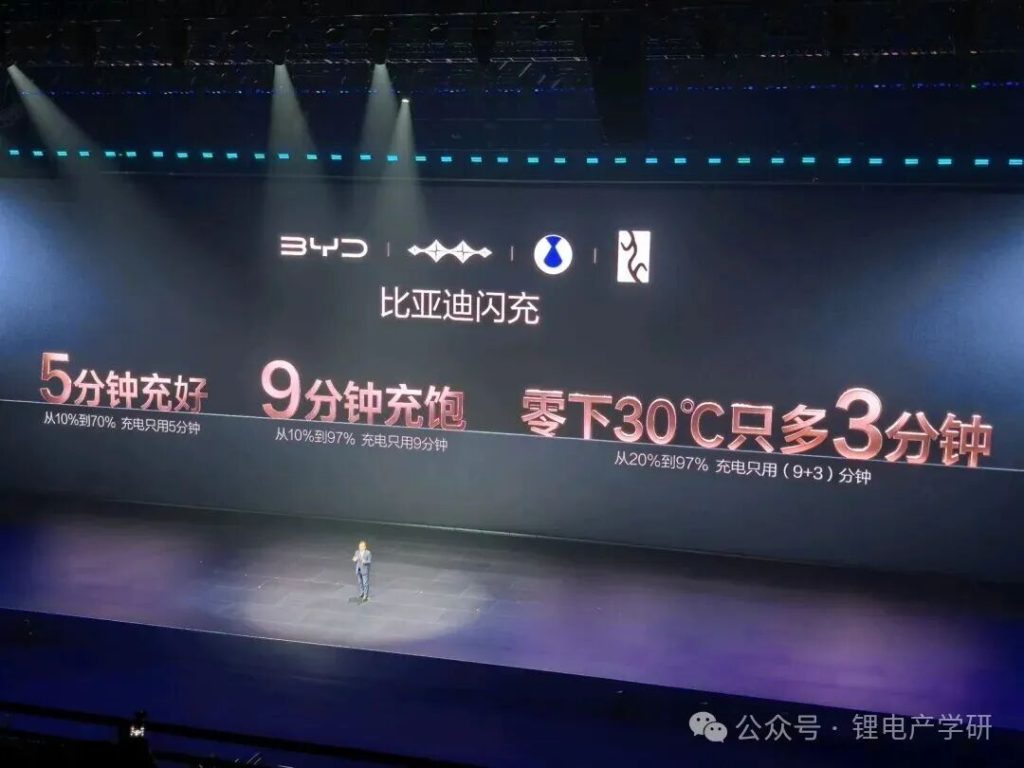
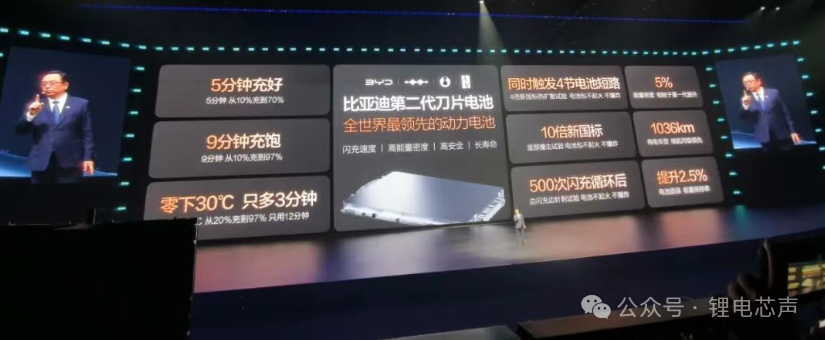
Expert Translation: Ultra-fast charging: 10% to 97% SOC (State of Charge) in just 9 minutes (10% to 70% in 5 minutes). Even at a frigid -30°C, the battery recharges from 20% to 97% in 12 minutes.
2. Energy Density (Gravimetric Efficiency)
Expert Translation: System-level gravimetric energy density reaches 190–210 Wh/kg, a ~40% increase over the first generation. Cell-level energy density exceeds 200 Wh/kg.
3. Cruising Range (Driving Autonomy)
Expert Translation: Breakthrough range performance: The Denza Z9GT achieves a CLTC range of 1,036 km, while the Yangwang U7 (equipped with a 150 kWh pack) reaches 1,006 km.
4. Low-Temperature Performance (Cold-Weather Resilience)
Expert Translation: Superior low-temperature capacity retention: Maintains over 85% of total capacity at -20°C.
5. Core Chemistry & Safety (Material System)
Expert Translation: Adopts the Lithium Manganese Iron Phosphate (LMFP) chemical system while upholding the inherent “Blade” safety DNA—zero thermal runaway during nail penetration tests.
6. Ancillary Technology (Charging Infrastructure)
Expert Translation: Launch of Flash Charging 2.0 technology with a peak power output of 1,500 kW, enabling a range replenishment of 400–500 km in 5 minutes.
7. Debut Model Lineup (First Deployment)
Expert Translation: Debut models include the Yangwang U7, Denza N9, Fang Cheng Bao Bao 3, Seal 07, Great Tang, Sealion 06, Song Ultra, Fang Cheng Bao Bao 7, Denza Z9GT, and Yangwang U8 L.
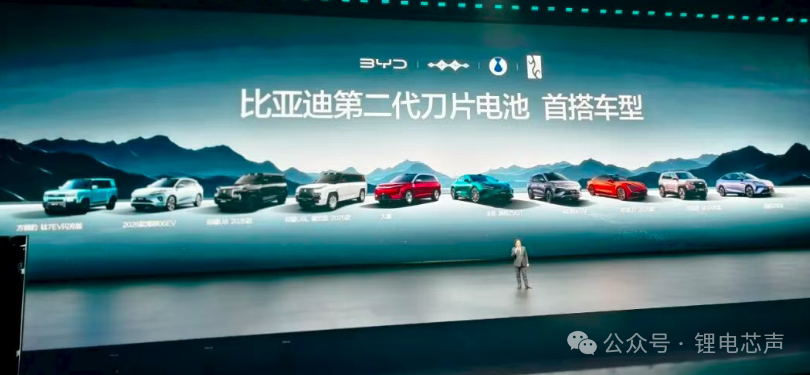
8. Technology Democratization (Market Strategy)
Expert Translation: Technological inclusivity: Deployment to mainstream models priced between RMB 100,000–200,000 within the year 2026.
BYD’s Second-Generation Blade Battery Technical Breakdown: Shattering “The Impossible Trinity”
I. Overcoming the Traditional Trade-offs
Historically, electric vehicles (EVs) have struggled to balance high power output, extended cruising range, and ultra-fast charging—the so-called “Impossible Trinity” of battery design. BYD’s Second-Generation Blade Battery shatters this paradigm by integrating an advanced Lithium Manganese Iron Phosphate (LMFP) cathode system. This innovation drives the system-level gravimetric energy density to 190–210 Wh/kg (a ~40% year-on-year increase), fundamentally mitigating “range anxiety” at the source.
II. High Power and Voltage Stability
The Yangwang U7, powered by a 150 kWh pack, delivers a staggering 1,300 horsepower and a 0–100 km/h acceleration in just 2.9 seconds. This performance underscores the battery’s exceptional voltage stability and low internal resistance during high-drain discharge cycles, ensuring consistent power delivery even under extreme loads.
III. Megawatt-Scale Charging & Thermal Resilience
Complementing the cell-level upgrades is the Megawatt Flash Charging 2.0 technology, boasting a peak charging power of 1,500 kW. It enables a 10% to 97% State of Charge (SOC) in a mere 9 minutes. Crucially, the system demonstrates remarkable thermal resilience, completing the same charging cycle in just 12 minutes at -30°C. This level of range replenishment efficiency now directly rivals the refueling experience of Internal Combustion Engine (ICE) vehicles.
Official Unveiling of BYD’s Second-Generation Blade Battery Conclusion
By achieving a simultaneous breakthrough in performance, range, and charging kinetics, BYD has established a new industry benchmark, positioning itself at the absolute forefront of the global energy transition.
Market Dimension: Accelerating the EV Transition & Technological Democratization
I. Dismantling the Final Defense of ICE Vehicles
The long-standing advantages of Internal Combustion Engine (ICE) vehicles—namely refueling convenience and cold-weather reliability—are rapidly eroding. With charging speeds now comparable to refueling and low-temperature range degradation capped within 15%, the last remaining barrier to mass EV adoption is being dismantled.
II. Rapid Downstreaming of High-End Technology
Most significantly, BYD has confirmed the deployment of this second-generation technology to mainstream models priced between RMB 100,000 and 200,000 within 2026. This technological democratization means that mass-market family vehicles will soon feature ultra-long range and flash-charging capabilities, a move poised to fundamentally reshape the competitive landscape of the global automotive market.
Industrial Dimension: Consolidating LFP’s Dominance
III. Strengthening the LFP Stronghold
By 2025, Lithium Iron Phosphate (LFP) batteries already commanded an 81.2% market share in China. The introduction of the Second-Generation Blade Battery, featuring an upgraded LMFP (Lithium Manganese Iron Phosphate) chemistry, will further amplify the structural cost advantages of the “Blade” architecture. This not only consolidates LFP’s dominant position over NCM (Nickel Cobalt Manganese) alternatives but also catalyzes a performance-driven upgrade across the entire supply chain.
Official Unveiling of BYD’s Second-Generation Blade Battery Summary: A Comprehensive, “Zero-Weakness” Evolution
The launch of BYD’s Second-Generation Blade Battery represents an all-encompassing, zero-weakness upgrade. By resolving the “triad” of industry pain points—charging kinetics, energy density, and low-temperature resilience—through material innovation, and integrating it with Megawatt Flash Charging and high-voltage platforms, BYD has constructed a complete and robust energy replenishment ecosystem.
Due to my limited expertise and language proficiency, errors and omissions may occur. Should you identify any inaccuracies or potential copyright issues, please contact me via private message. I will rectify or remove the content immediately.