
Testing Process in Lithium-ion Battery PACK Production Lines
Source: WeChat Official Account “Lithium Battery Party” 微信公众号 锂电派
In today’s rapidly evolving technological landscape, lithium-ion battery modules and battery PACKs have become an indispensable energy storage solution in many electronic devices and automotive industries. However, with the rise of electric vehicles and renewable energy, the performance and safety requirements for lithium-ion battery modules are also increasing. Therefore, comprehensive and systematic testing is crucial to ensure the stability and reliability of lithium-ion battery modules. This article will explore the testing process of a lithium-ion battery module PACK production line, providing readers with a complete understanding from different perspectives.
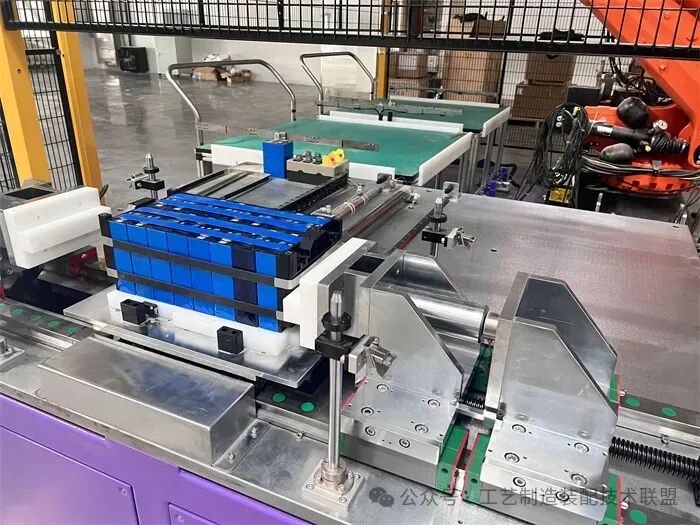
Testing Process for Lithium-ion Battery Module PACK Production Lines
I. Preliminary Inspection
Before conducting any formal tests, a preliminary inspection of the battery module is essential. This includes verifying the integrity of the housing, ensuring connectors are in good condition, and ruling out any obvious physical damage or defects.
1. Housing Inspection
First, the battery module housing must be carefully examined. Usually made of metal or plastic, the housing protects internal cells and electronic components from the external environment. Check for scratches, dents, cracks, abnormal deformation, or looseness. Any such issues could compromise performance and safety and must be identified and repaired immediately.
2. Connector Inspection
Next, the connectors must be checked. As the interface between the battery module and external systems (e.g., EV drive systems or power management systems), they are responsible for transmitting power and data signals. Ensure contacts are secure and free of oxidation or damage to prevent disconnection or poor contact during use. Electrical testing and visual inspections are used to verify reliability.
3. Cleaning and Maintenance
Surface dust, dirt, and debris should be removed to keep the module clean. Regularly check and tighten screws and fasteners to prevent them from loosening. Additionally, verify the sealing performance to ensure waterproofing and prevent liquid ingress.
II. Visual Inspection
Visual inspection is a critical step to ensure the overall integrity of the battery module, focusing on the housing, labeling, and connectors.
1. Housing Inspection
Surface Check: Inspect for dents, scratches, or cracks that might lead to leaks or structural weaknesses.
Sealing Check: Ensure seals and joints are intact to prevent short circuits caused by external liquids.
Structural Check: Confirm the structure is stable and resistant to external impacts or vibrations.
2. Labeling Inspection
Verify that information such as manufacturer, model, serial number, rated voltage, and capacity is clear, legible, and accurate to avoid misuse.
3. Connector Inspection
Appearance: Ensure no corrosion or oxidation is present.
Connection Reliability: Use tools to verify that connections remain firm under operation.
Waterproofing: For modules used in humid environments, verify the connector’s waterproof rating.
III. Electrical Performance Testing
This core step evaluates the module’s voltage, current, capacity, and internal resistance to assess stability.
1. Voltage Test
Using precision instruments, both Open Circuit Voltage (OCV) and operating voltage under load are measured. These values are compared against design standards to evaluate voltage stability and consistency.
2. Current Test
This measures the current magnitude and trends during different charge/discharge conditions. Analyzing current waveforms helps understand the module’s characteristics for practical applications.
3. Capacity Test
Through charge-discharge cycling, the available capacity and energy density are measured. This assesses capacity decay and cycle life, providing a reference for the module’s expected service life.
4. Internal Resistance Test
Internal resistance is a key indicator of battery health. By measuring DC internal resistance, technicians can evaluate electrode conductivity and internal contact status to detect potential issues early.
IV. Temperature Testing
Temperature significantly impacts performance and safety; therefore, modules are tested across various thermal conditions.
1. Ambient Temperature Test
The module is exposed to different environments to measure how voltage, current, and capacity fluctuate within the normal operating temperature range.
2. Thermal Cycling Test
This simulates real-world temperature shifts by cycling the module between high and low temperatures to determine its endurance against thermal stress.
3. Temperature Control and Monitoring
Precise equipment and monitoring systems are used to ensure test data accuracy by maintaining constant temperatures or specific cycling patterns.
V. Safety Testing
Safety testing is paramount to prevent accidents and ensure compliance with rigorous industry standards.
1. Overcharge Protection Test
Simulates overcharging scenarios to verify that the protection mechanism activates promptly to prevent damage or safety hazards.
2. Over-discharge Protection Test
Ensures the system can effectively shut down or protect the module when it reaches the minimum voltage threshold, preventing permanent cell damage.
3. Short Circuit Test
Simulates short circuit conditions to evaluate the protection mechanism’s ability to prevent overheating, combustion, or explosion.
VI. Communication Testing
Essential for modules with communication interfaces (like CAN bus) used for data exchange with external controllers.
1. Interface Test
Checks the physical connectivity and signal integrity of the communication ports.
2. Data Transmission Test
Simulates real-world scenarios to test the rate, accuracy, and stability of data transmission, ensuring no data is lost or corrupted.
3. Compatibility Test
Ensures the module can communicate correctly with various models and versions of control systems.
4. Security Test
Verifies the security of the communication interface and data encryption to prevent unauthorized access or data leaks.
VII. Cycle Life Testing
Evaluates long-term stability and performance degradation through repeated usage simulations.
1. Cyclic Charge-Discharge Test
Continuously cycles the battery to track capacity decay trends and determine the total cycle life of the module.
2. Constant Capacity Charge-Discharge Test
Cycles the battery at specific capacity intervals to analyze performance changes under set conditions, providing a baseline for expected service life.
Conclusion
The testing process for a Lithium-ion Battery Module PACK production line is a vital link in ensuring quality. By integrating physical, electrical, thermal, safety, and communication checks, manufacturers can guarantee that every module is reliable, stable, and safe for its intended application.
Due to the limited knowledge and English level is inevitable errors and omissions, if there are errors or infringement of the text, please contact me as soon as possible by private letter, I will immediately be corrected or deleted.
Neware battery module and battery pack tester