
Electrochemical floating analysis test parameter settings on Neware BTS for solid electrolytes
Source: WeChat Official Account 萝卜大师兄 Master Radish Lbdsx
What is Electrochemical floating analysis?
Electrochemical Floating Analysis/Test, also known as Leakage Current Test or Potential Constant Step Test, is primarily used to evaluate the oxidative stability of electrolytes under high voltage. It reflects long-term stability better than traditional cyclic voltammetry (CV) or linear sweep voltammetry (LSV).
Today I’ll share the test steps for electrochemical floating analysis test. References: Carbon Neutralization 2024; 3: 386–395; Adv. Funct. Mater. 2021, 31, 2102347.
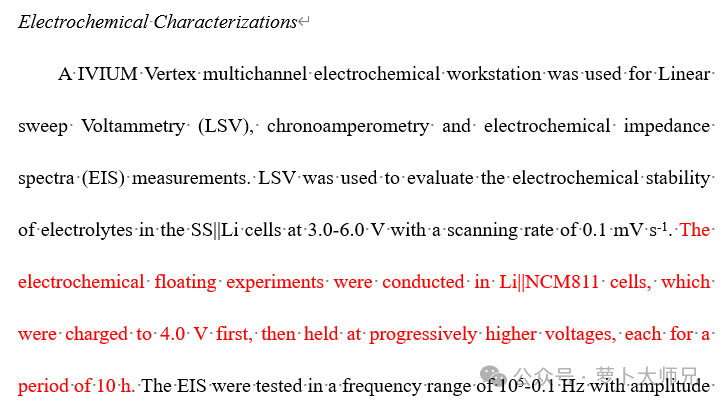
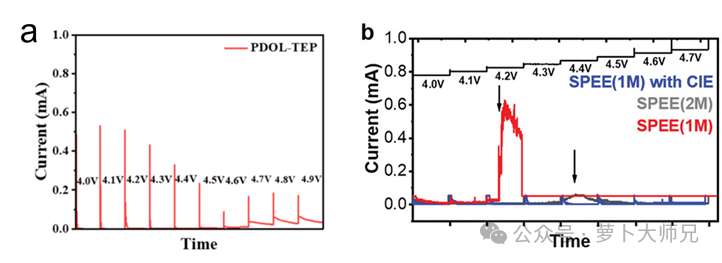
As shown in Figure 1, the test was conducted by assembling Li//NCM811, with the NCM811 system (high-voltage system) selected in the literature. The process involved first charging to 4 V, then maintaining a constant voltage of 4 V for 10 hours, followed by increasing the voltage by 0.1 V in increments and maintaining a constant voltage for 10 hours, recording the current changes during this process. The results are shown in Figure 2.
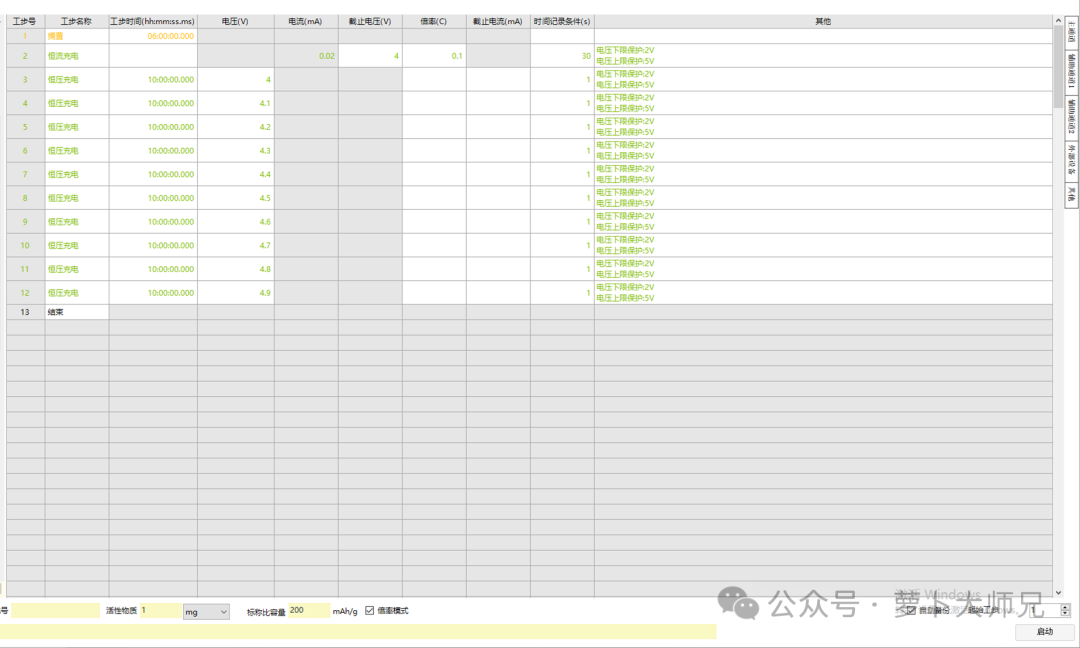
The specific setup steps are shown in Figure 3 (in C-rate mode, we assume a theoretical specific capacity of 200 mAh/g, an active material amount of 1 mg, and a test voltage range of 3-4.9 V). We start charging at 0.1 C and do not set a cutoff current because we only have one control condition: constant voltage charging for 10 hours. Since no cutoff current is set, we must set a protection voltage (We are using Neware battery cyclers).
How can I avoid setting a cutoff current?
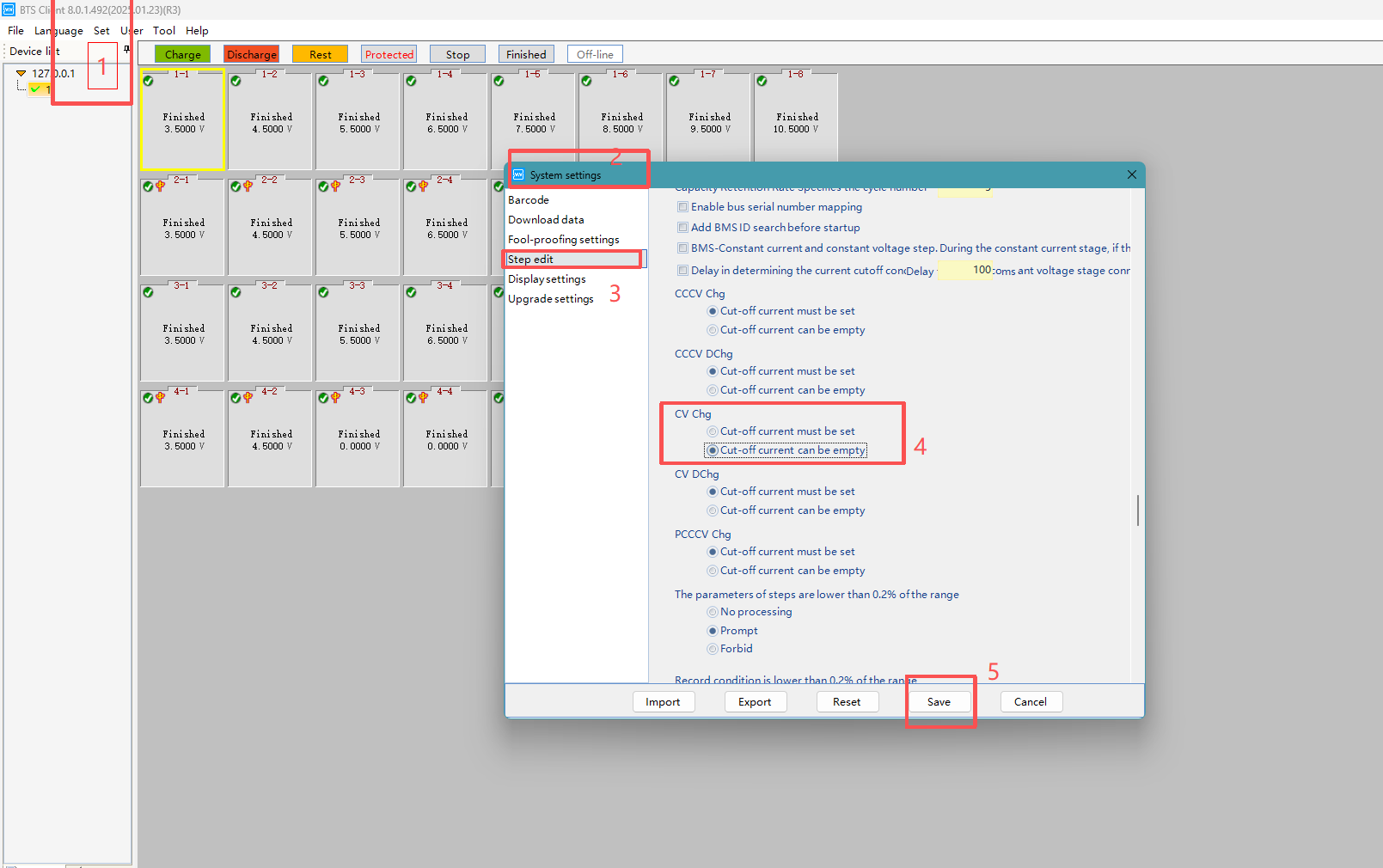
Set——System settings——Step edit——CV Chg, you can choose Cut-off current can be empty——Save
5 Useful Tips for Using NEWARE BTS
How to set GITT test on Neware BTS for lithium-sulfur batteries?