
New post from WeChat Official Account: Lithium Matters (言之成锂)
Is this a supercapacitor or an all-solid-state battery? 2026 post
Donut’s latest all-solid-state battery has been going viral across the internet over the past few days. Simultaneously, it has sent shockwaves through the overseas battery community.
The performance data they released is simply mind-blowing—so incredible that it feels like technology from another planet.
A friend of mine, James—an industry veteran in the battery sector based abroad—has conducted an in-depth investigation and interpretation of this company and its newly released products. His detailed analysis is as follows:
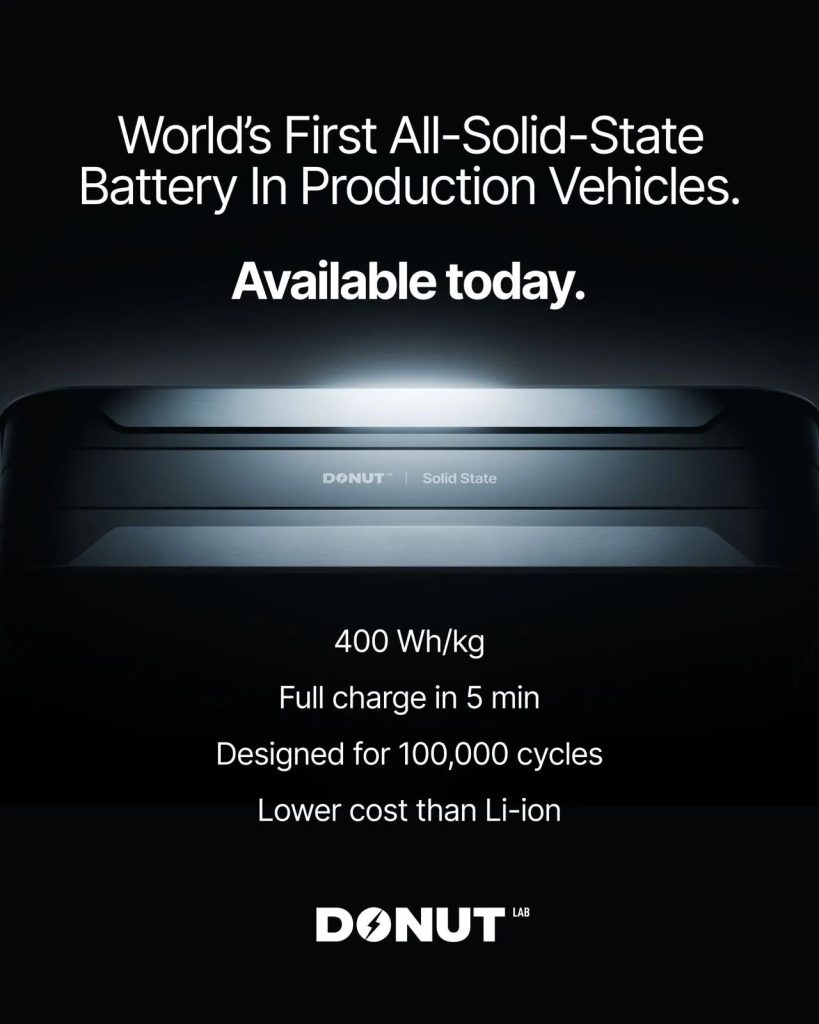
The specifications for Donut’s all-solid-state battery are as follows:
Energy Density: 400 Wh/kg;
Fast Charging: Full charge in just 5 minutes;
Design Cycle Life: Up to 100,000 cycles; If you need to test your battery’s cycle life, use Neware battery cyclers.
Safety: Exceptionally high;
Sustainability: Made from earth-abundant materials;
Low-Temperature Performance: Over 99% capacity retention at -30°C; If you need to control the temperature when testing batteries
Cost: Lower than conventional lithium-ion batteries.
Without a doubt, this product is an absolute “eye-catcher.” Looking at each parameter individually, they are all industry-leading. However, if a single battery could simultaneously satisfy all these characteristics, it would undeniably represent a disruptive technological leap for the global lithium battery industry. This raises a critical question.
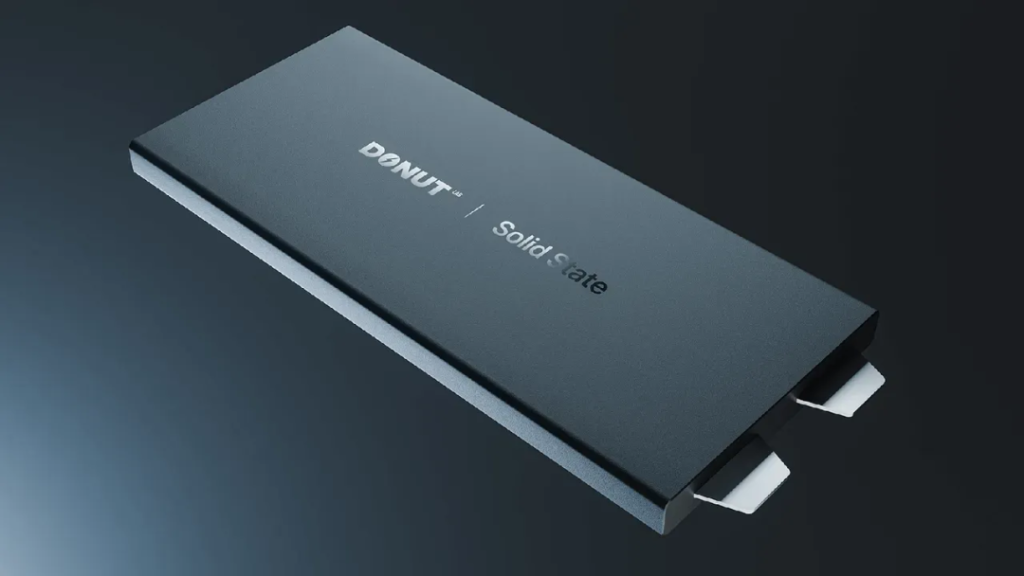
1. How did Donut achieve this technology? Is this a supercapacitor or an all-solid-state battery?
It is understood that Donut does not actually have a dedicated battery R&D team. Data from social media platforms indicates that the company has only 37 employees, with its core business seemingly focused on electric motor R&D and even skateboard chassis development.
So, where exactly did this battery technology come from?
After some deep digging, it was discovered that Donut recently invested in a firm called Nordic Nano. On its official website, Nordic Nano states: “We provide sustainable renewable energy solutions for the global market, leveraging advanced materials technology to create industry-leading solar and energy storage products.”
Nordic Nano is a nanotechnology company with only 10 employees, and Donut is one of its shareholders. In fact, Nordic Nano itself posted an update on social media mentioning Donut’s recent battery announcement.
Based on this, it can be inferred that at least a portion of the technology unveiled this time originates from Nordic Nano’s R&D efforts.
2. Is this even a lithium-ion battery at all?
Here comes the critical insight: Nordic Nano does not actually manufacture batteries. Their core product is the Electric Double-Layer Capacitor (EDLC), commonly known as a “supercapacitor.”
In a presentation slide from Nordic Nano, they claim their product achieves an energy density of 400 Wh/kg with a cycle life of 50,000 cycles. Given this, the origin of the parameters announced by Donut becomes self-evident.
If we step outside our fixed perception of “lithium-ion batteries” and re-examine these specs through the lens of “supercapacitors,” everything starts to make sense:
Energy Density 400 Wh/kg: → ❓ Questionable
Full charge in 5 minutes: → ✅ Reasonable (typical of capacitor power)
Cycle life of 100,000: → ✅ Reasonable (typical of capacitive mechanisms)
Extreme safety: → ✅ Reasonable (no thermal runaway risk)
Made of earth-abundant materials: → ✅ Reasonable (usually carbon-based)
>99% retention at -30°C: → ✅ Highly Plausible (no sluggish ionic diffusion)
Cost lower than Li-ion: → ❓ Questionable
At this stage, three key issues remain to be clarified: nomenclature (naming), energy density, and cost.
➡️ Nomenclature There is a strong suspicion that the product unveiled by Donut is neither an all-solid-state battery nor even a lithium-ion battery at all. Its true identity is far more likely to be a supercapacitor.
➡️ Energy Density There are two primary reasons why supercapacitors have never been widely adopted in electric vehicles (EVs), with low energy density being a major one.
Typical capacitors usually have an energy density of only 1–10 Wh/kg, whereas lithium-ion batteries can reach 150–300 Wh/kg. That being said, if this product is indeed a supercapacitor, it would qualify as an ultra-high energy density variant.
However, there have indeed been relevant research precedents: in May 2025, a South Korean research team developed a supercapacitor with an energy density of 418 Wh/kg; and in late 2023, another supercapacitor model achieved 196 Wh/kg.
➡️ Energy Density Data Analysis
Based on the information disclosed by Donut at CES in the United States recently, the company claims this cell possesses an energy of 125 Wh, an energy density of 400 Wh/kg, and a weight of 310 g.
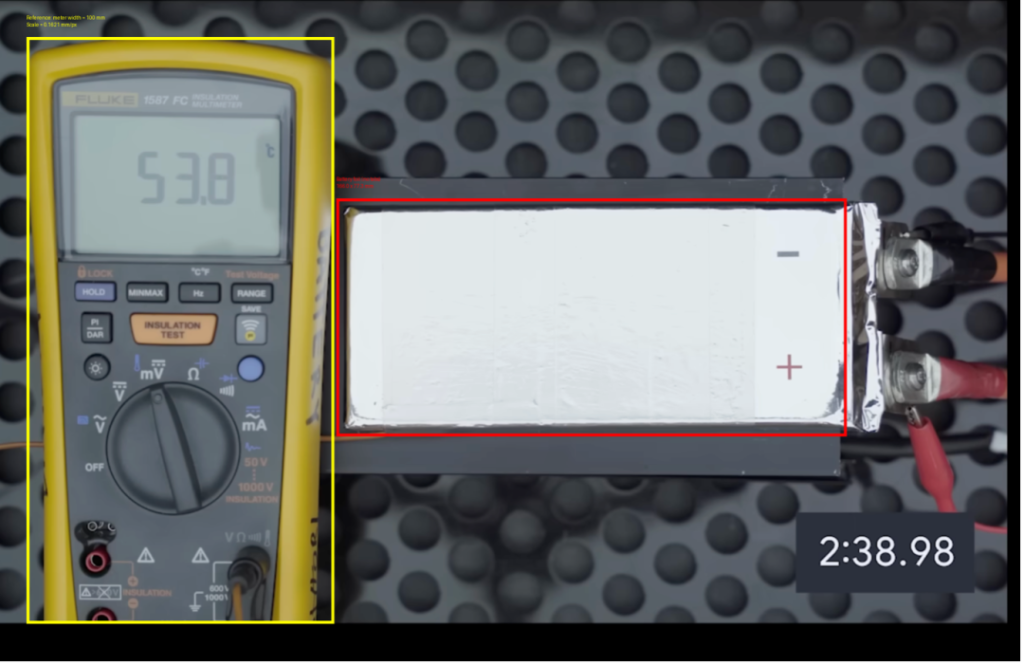
However, the actual energy of the pouch cell shown in the video could not possibly reach 125 Wh. In the launch video, the charging time is 5 minutes, and the charger displays a current of 270 A. Based on these figures, the cell’s capacity would be 22.5 Ah. For the total energy to reach 125 Wh, the nominal voltage would need to be 5.5 V—yet the voltage shown on the charger clearly does not support this.
If we assume a more realistic nominal voltage of 4 V, the actual energy would be 90 Wh. Combined with the weight of 310 g, the energy density would calculate to 290 Wh/kg. Of course, these calculations rely on several assumptions and serve only as a reference. Furthermore, since the video only captures snippets of the charging process and lacks full technical disclosure, these estimates remain debatable.
We further estimated the volumetric energy density. Using a Fluke multimeter as a size reference, the cell in the video measures approximately 166 × 77 × 10 mm, resulting in a volume of roughly 0.13 L. Based on a capacity of 90 Wh, the volumetric energy density is approximately 692 Wh/L. This value would already place it at the absolute pinnacle of the lithium-ion battery industry.
➡️ Cost Concerns
According to public data, the cost per kilowatt-hour ($/kWh) for capacitors is typically more than ten times that of lithium-ion batteries. Donut’s claim that this product’s cost is lower than that of lithium-ion batteries remains unverifiable at this stage.
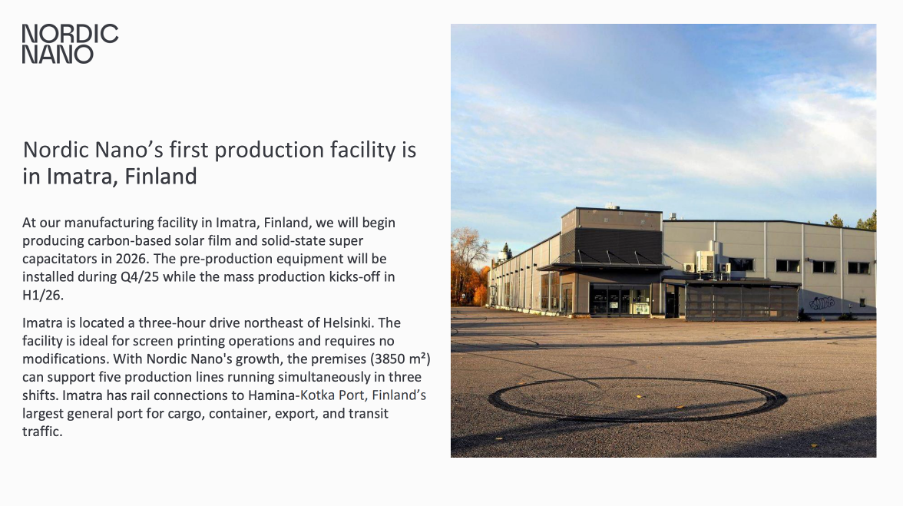
However, from a manufacturing perspective, the production process for supercapacitors is indeed simpler than that of batteries. Nordic Nano stated that their production facility in Finland completed equipment installation in the fourth quarter of 2025, with mass production scheduled for the first half of 2026.
Nevertheless, their prospectus contains no actual photographs of the factory interior. As a result, we are unable to confirm whether the equipment has truly been commissioned and is in place.
What is the final conclusion? Is this a supercapacitor or an all-solid-state battery?
If we define this product as a lithium-ion battery, almost every parameter is riddled with inconsistencies and remains unverifiable. However, if we view it as a supercapacitor, then only two questions remain to be validated: cost and energy density.
By traditional industry standards, for this product to achieve commercial viability, it would need to deliver a tenfold breakthrough in both cost-efficiency and energy density simultaneously.
In summary, this is undoubtedly a high-stakes tech launch where immense potential risk and high reward coexist.
Due to the limited knowledge and English level is inevitable errors and omissions, if there are errors or infringement of the text, please contact me as soon as possible by private letter, I will immediately be corrected or deleted.