
Prof. Yunhui Huang’s Group Leads the Way in Battery Innovation: Key Research Highlights (2025)
Professor Yunhui Huang | Academic Biography
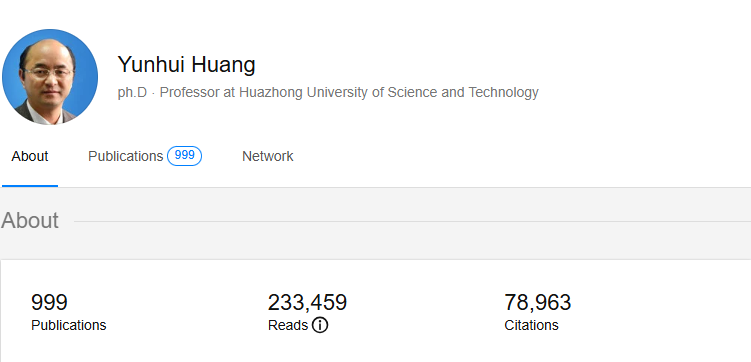
Yunhui Huang is a Professor at Huazhong University of Science and Technology (HUST), where he also serves as the Vice Chair of the University Academic Committee. He is a recipient of several of China’s most prestigious academic honors, including the Changjiang Distinguished Professorship, the National Science Fund for Distinguished Young Scholars, and the National Talent Project of the New Century. He is also a recipient of the State Council Special Allowance.
Professor Huang’s expertise is recognized at the national policy level, having served as a subject expert for the “863” Program (Ministry of Science and Technology) and on the general expert group for the 14th Five-Year Plan on High-end Functional and Intelligent Materials. His leadership extends to professional societies, where he serves as a Standing Director of both the Chinese Materials Research Society (C-MRS) and the Chinese Ceramic Society (CCS), as well as Vice President of the Solid State Ionics Division of CCS.
He earned his B.S., M.S., and Ph.D. degrees from Peking University, followed by postdoctoral research at the Tokyo Institute of Technology and the University of Texas at Austin.
Research Impact and Achievements
Specializing in new energy materials and devices, Professor Huang has built a prolific research portfolio:
- Publications: Over 600 papers as first or corresponding author, including 2 in Science, 1 in Nature, and over 20 in prestigious sub-journals such as Nature Materials, Nature Nanotechnology, and Nature Sustainability.
- Citations: His work has garnered over 85,000 citations with an H-index of 151.
- Recognition: Consistently recognized as a Clarivate Highly Cited Researcher and an Elsevier Highly Cited Chinese Researcher.
- Innovation: He holds over 100 authorized patents. His innovations in LFP cathode materials, ultra-fast charging, and battery ultrasonic imaging technology have achieved widespread industrial application.
- Awards: Recipient of the Second Prize of the National Natural Science Award and five provincial/ministerial science and technology awards.
- Mentorship: He has mentored 16 students who have been selected for national-level talent programs.
Selected Representative Works (2025)
The following is a selection of representative research published by Professor Yunhui Huang’s group in 2025.
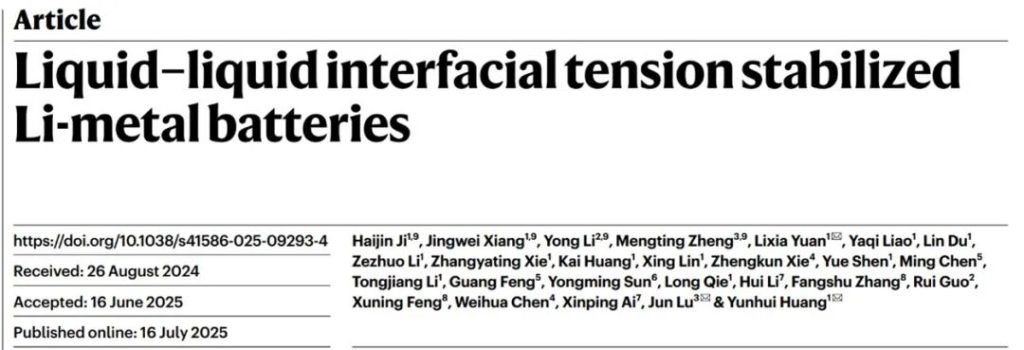
1. Nature: Liquid–liquid interfacial tension stabilized Li-metal batteries
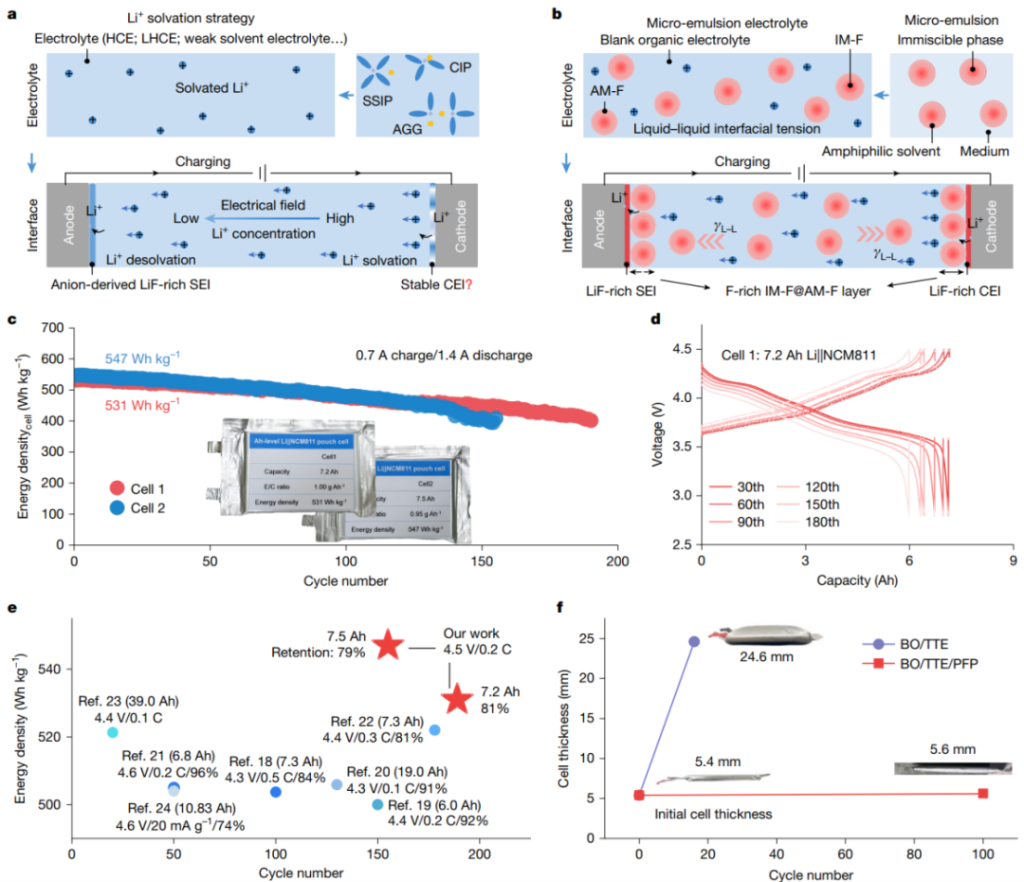
The collaborative team led by Professors Yunhui Huang and Lixia Yuan from Huazhong University of Science and Technology (HUST), together with Professor Jun Lu’s group from Zhejiang University, has proposed a novel interfacial regulation strategy based on liquid-liquid interfacial tension (γL–L). They developed a new class of heterogeneous microemulsion electrolytes, successfully incorporating functional solvent components with poor solubility into the electrolyte system.
Through precise molecular design, perfluorinated solvents and locally fluorinated amphiphilic solvents are complexed via intermolecular forces to form microemulsion micelles (50–120 nm). This allows the fluorinated phase to be uniformly and stably dispersed within the continuous electrolyte phase. Furthermore, by leveraging γL–L as a driving force, these functional components are induced to migrate and simultaneously enrich at both the anode and cathode interfaces. This process constructs a gradient-distributed fluorinated interfacial solvation layer.
Liquid–liquid interfacial tension stabilized Li-metal batteries
Nature volume 643, pages1255–1262
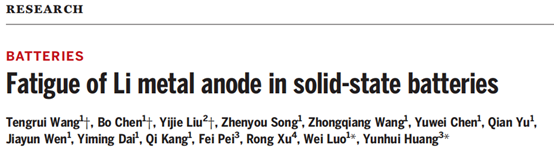
2. Science: Fatigue of Li metal anode in solid-state batteries
The collaborative team led by Professor Yunhui Huang from Huazhong University of Science and Technology (HUST) and Professor Wei Luo from Tongji University has unveiled a critical link between the failure of solid-state lithium metal batteries (SSBs) and the fatigue of the lithium metal anode (LMA), utilizing in-situ scanning electron microscopy (SEM) and phase-field simulations. Their research reveals that the LMA undergoes a fatigue process during electrochemical cycling that conforms to the Coffin-Manson equation—a fundamental principle in mechanics. This fatigue manifests as the gradual accumulation of micropores and cracks within the lithium metal, ultimately leading to interfacial degradation and catastrophic battery failure.
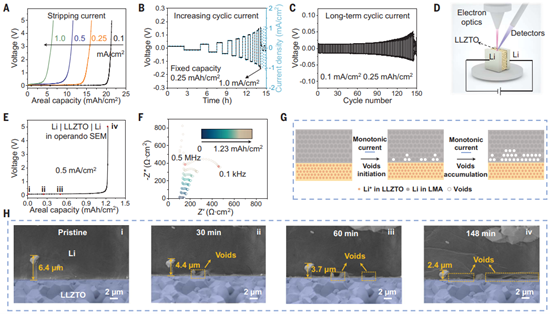
Fatigue of Li metal anode in solid-state batteries
Science 388, 311–316 (2025)
Use Neware battery cyclers test solid-state batteries
3. Nature Sustainability: Electrode separation via water electrolysis for sustainable battery recycling
Professor Wang Chao’s research group at Tongji University, in collaboration with Professors Huang Yunhui and Li Ju, has proposed a water electrolysis-induced separation method that utilizes H2 or O2 gas bubbling to efficiently delaminate electrode materials from current collectors. At a current density of 10 mA cm-2, this method achieves a 99.5% recovery rate for lithium iron phosphate LiFePO4 in just 34 seconds (with metal impurity content <40 ppm, while graphite separation requires only 3 seconds. The energy consumption is remarkably low, at 11 kJ·kg-1and 1.1 kJ·kg-1, respectively.
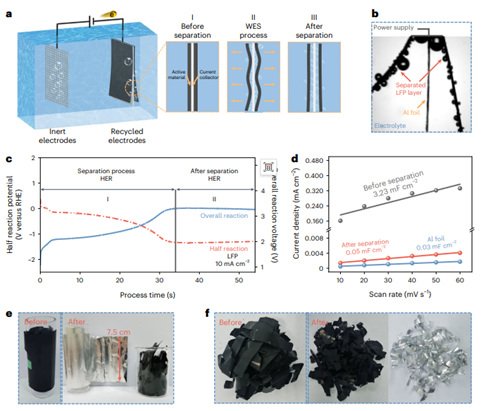
Electrode separation via water electrolysis for sustainable battery recycling
Nature Sustainability | Volume 8 | May 2025 | 520–529
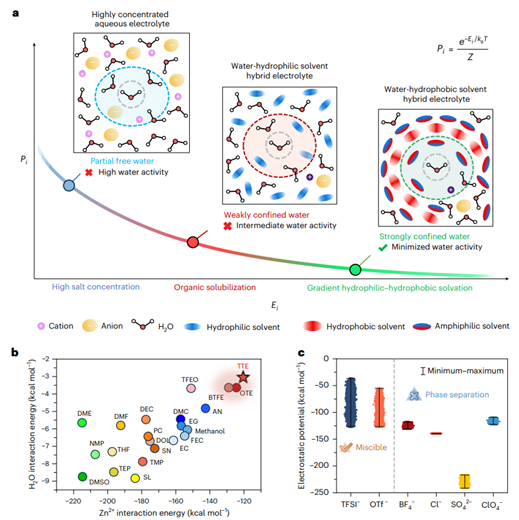
4. Nature Nanotechnology: Nanoengineered aqueous-hydrotrope hybrid liquid electrolyte solutions for efficient zinc batteries across a wide temperature range
In a collaborative effort, Professors Huang Yunhui of Huazhong University of Science and Technology, Zhi Chunyi of City University of Hong Kong, Fan Xiulin of Zhejiang University, Kan Wang Hay of the Spallation Neutron Source Science Center (Institute of High Energy Physics, Chinese Academy of Sciences), and Luo Wei of Tongji University have proposed a nano-engineering strategy. This strategy restricts water molecule activity by constructing a hydrophilic-hydrophobic gradient hydration shell. By introducing hydrophobic hydrofluoroethers and fluorinated alcohol water-soluble molecules into zinc-salt electrolytes, the team successfully created a unique ‘water nano-confinement’ structure.
Nature Nanotechnology
5. Nature Communications: Ion bridging enables high-voltage polyether electrolytes for quasi-solid-state batteries
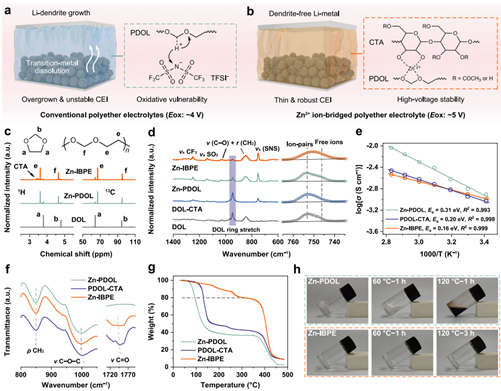
The team led by Professors Huang Yunhui and Xu Henghui from Huazhong University of Science and Technology has proposed a universal strategy to significantly enhance the oxidative stability of polyether electrolytes by bridging non-lithium metal ions with ether oxygen atoms. To demonstrate the feasibility of this ion-bridging strategy, a zinc-ion bridged polyether electrolyte (Zn-IBPE) was developed. It exhibits an electrochemical stability window exceeding 5V and enables excellent cycling stability in 4.5V lithium metal batteries.
Ion bridging enables high-voltage polyether electrolytes for quasi-solid-state batteries
Nature Communications | (2025) 16:962
6. Nature Communications: A multifunctional quasi-solid-state polymer electrolyte with highly selective ion highways for practical zinc ion batteries
Professor Yunhui Huang from Huazhong University of Science and Technology, Researcher Jiaqian Qin from Chulalongkorn University, and Professor Xinyu Zhang from Yanshan University have developed a multifunctional quasi-solid-state polymer electrolyte. Engineered through the molecular cross-linking of sodium polyacrylate, lithium magnesium silicate, and cellulose nanofibers, this electrolyte features highly selective ion transport channels.
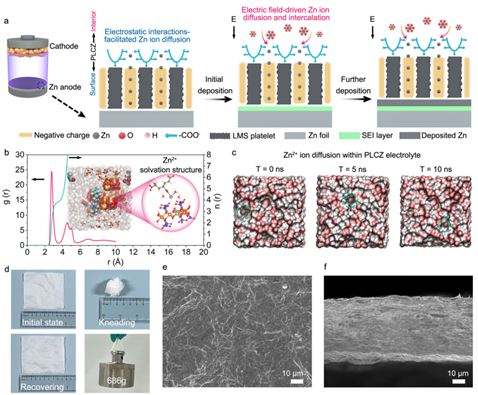
Nature Communications | (2025) 16:183
7. Chemical Society Reviews: Smart batteries: materials, monitoring, and artificial intelligence
The team led by Professor Yunhui Huang systematically explores the latest advances in responsive materials with self-protective and self-healing functions within various battery components (electrolytes, separators, electrodes, etc.). The study elaborates on advanced sensing technologies for real-time safety monitoring and AI algorithms for predictive life management. Meanwhile, it identifies key challenges and outlines interdisciplinary future research directions, providing a comprehensive and in-depth reference for smart batteries to drive global energy storage innovation and facilitate the sustainable energy transition.
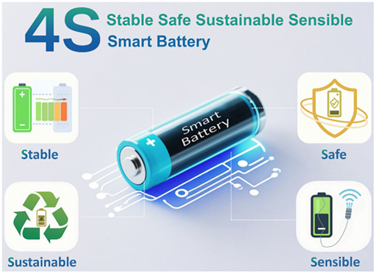
Smart batteries: materials, monitoring, and artificial intelligence
Chem. Soc. Rev., 2025, 54, 10006–10139
8. Joule: Interlayer-expanded carbon anodes with exceptional rates and long-term cycling via kinetically decoupled carbonization

The research teams led by Prof. Yonggang Yao, Prof. Yunhui Huang, Prof. Yongjin Fang, and Prof. Shuze Zhu have proposed a kinetic-decoupling carbonization strategy based on transient high temperatures. By integrating precise precursor design, fine-tuned carbonization control, and well-defined carbon architectures, the team achieved the controllable synthesis of expanded carbon-based anode materials. This approach significantly enhances the capacity, rate capability, and cycling stability of sodium-ion battery anodes.
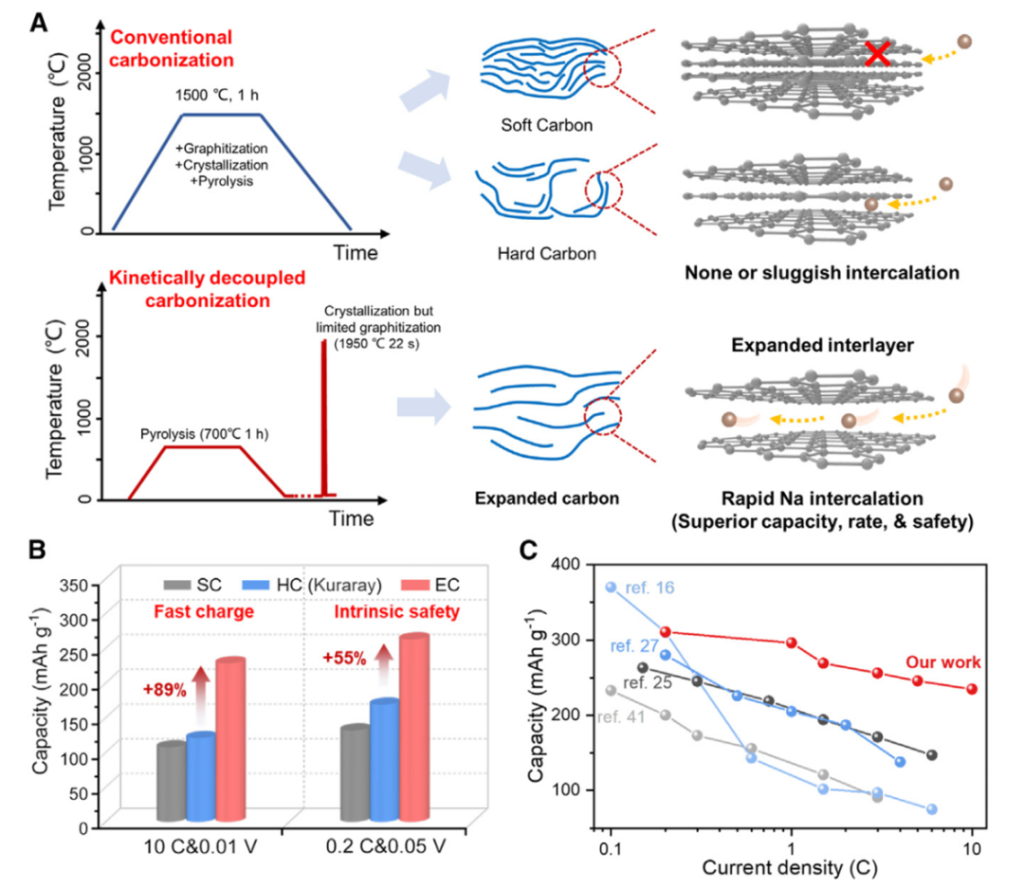
Joule 9, 101812, March 19, 2025
9. Journal of the American Chemical Society: Tuning interphasial chemistry with titanium–oxo clusters for high-energy-density lithium metal batteries
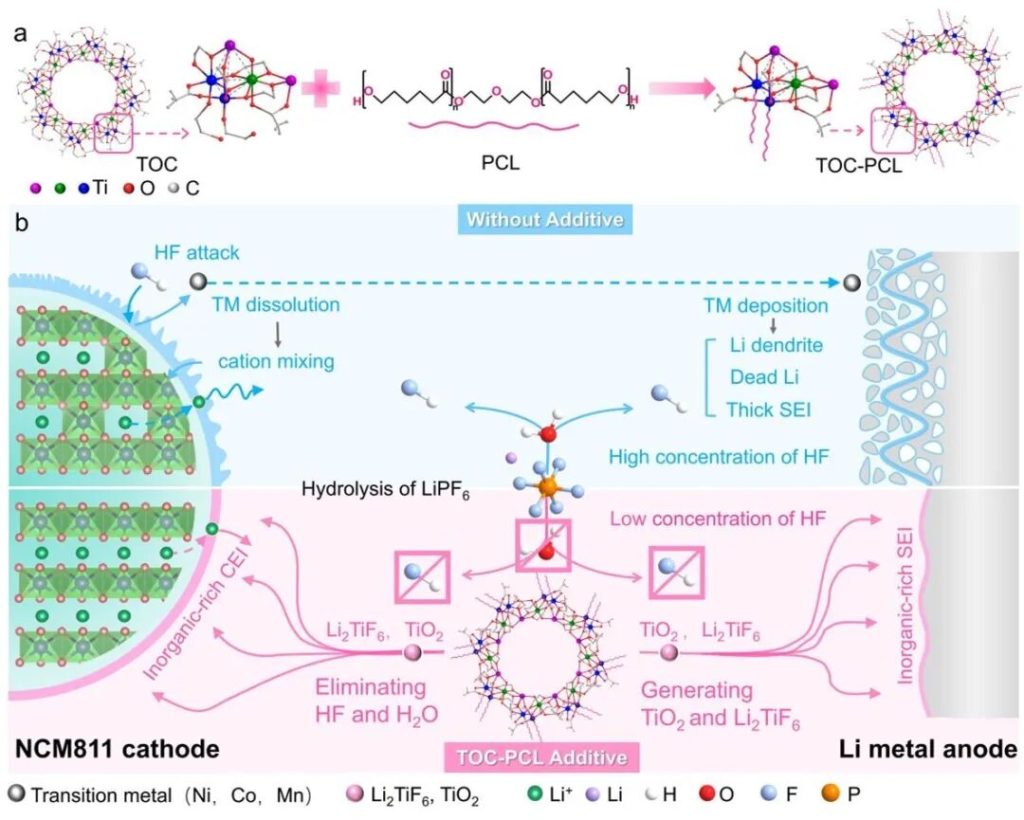
The research team led by Prof. Yunhui Huang and Associate Researcher Fei Pei from Huazhong University of Science and Technology proposed the use of polycaprolactone (PCL) diol-modified titanium-oxo clusters (TOC-PCL) as a multifunctional electrolyte additive to regulate the interfacial chemistry of high-nickel cathodes and lithium anodes. Trace H2O and HF in the electrolyte are effectively scavenged through the hydrolysis of TOC-PCL. Subsequently, a stable electrode-electrolyte interface rich in inorganic components (TiO2、Li2TiF6, and LiF) is constructed in situ during cycling, which significantly inhibits interfacial chemical erosion.
J. Am. Chem. Soc. 2025, 147, 47, 43655–43665
10. Journal of the American Chemical Society: Tailored Interphase Chemistry Enables Ultra-Stable O3-Type Sodium Layered Oxide Cathodes
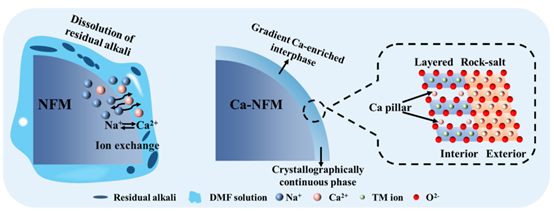
To address the interfacial instability of O3-type sodium layered oxide cathode materials, a joint research team from Huazhong University of Science and Technology (Yunhui Huang), Tongji University (Chao Wang), Peking University (Jihan Zhou), and Sichuan University (Yuesheng Wang) has proposed a straightforward surface engineering strategy. This approach integrates in-situ ion exchange with a subsequent annealing process.
Tailored Interphase Chemistry Enables Ultra-Stable O3-Type Sodium Layered Oxide Cathodes
J. Am. Chem. Soc. 2025, 147, 48, 44060–44071
Unfinished and to be continued
Prof. Yunhui Huang’s Group Leads the Way in Battery Innovation: Key Research Highlights (2025)-2