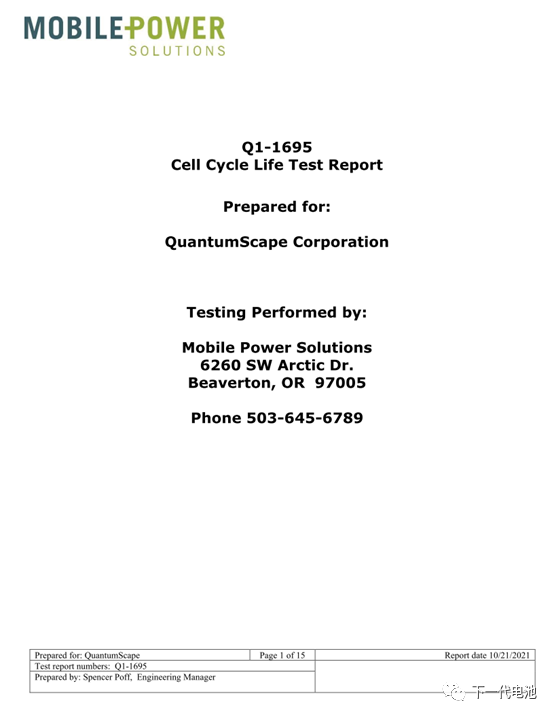
Third-Party Test Report for QuantumScape Single-Layer Solid-State Battery (Released October 27, 2021)
The Following is the Response from Google Gemini
1. Overview of the Testing Entity
The independent testing was conducted by Mobile Power Solutions (MPS), an ISO-17025 accredited laboratory specializing in battery characterization and safety testing. The validation focused on the performance of QuantumScape’s single-layer solid-state pouch cell prototypes.
2. Key Performance Metrics and Test Results
Cycle Life and Capacity Retention: The cells demonstrated a cycle life exceeding 800 cycles at a 1C/1C charge/discharge rate. After 800 cycles, the capacity retention remained above 80%, meeting a critical benchmark for automotive-grade durability.
Fast-Charging Capability: Testing verified that the cells can achieve an 80% State of Charge (SOC) within 15 minutes, demonstrating high power density and efficient ion transport.
Operating Conditions: The performance was achieved at 25°C (room temperature), which is a significant departure from many solid-state chemistries that require elevated temperatures to maintain ionic conductivity.
Applied Pressure: Testing was conducted under a commercially relevant pressure of approximately 3.4 atmospheres (50 psi).
3. Technical Significance
Anode-Free Design: The results were achieved using an “anode-free” configuration (lithium-metal formed in-situ), which maximizes both volumetric and gravimetric energy density.
Dendrite Resistance: The data validates the efficacy of the proprietary solid-state ceramic separator in preventing lithium dendrite penetration, even under high current densities and 100% Depth of Discharge (DoD).
Zero Excess Lithium: Unlike traditional lithium-metal batteries that require a thick foil of excess lithium, these cells operate with zero excess lithium, a key factor for reducing cost and increasing energy density.
4. Conclusion
The third-party validation by MPS confirms that QuantumScape’s solid-state technology can meet the rigorous cycle life and fast-charging requirements of the electric vehicle (EV) industry while operating under standard ambient conditions.
The following insights are shared by a Chinese battery industry expert, originally published on the WeChat Official Account: Next-Generation Batteries (下一代电池).
In its Q3 earnings report on October 26, QuantumScape mentioned that it would release a third-party validation report from Mobile Power Solutions. True to their word, the full report was made public on the 27th. The results show that the single-layer cell maintained 90% energy retention after 800 cycles at a 1C rate; similarly, the energy retention calibrated at C/3 also reached 90%. I have summarized the key highlights of the report to share with you all. The full report is available at the end of this post.
1. QuantumScape Basic Battery Specifications
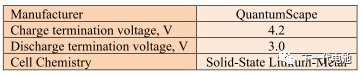
QuantumScape submitted three solid-state lithium-metal cells for testing. Upon arrival, all three cells exhibited an open-circuit voltage (OCV) of 3.744V, demonstrating remarkable consistency in their initial state.
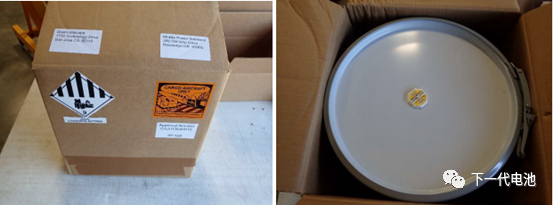
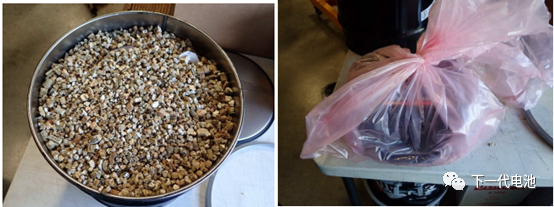
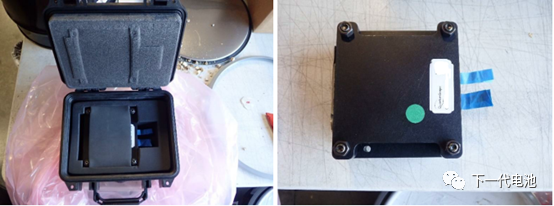
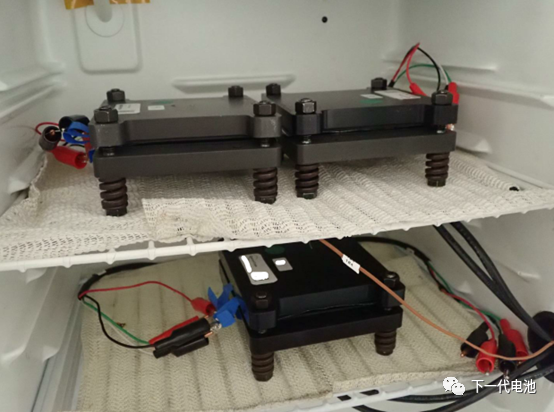
The images in the third-party report reveal that the cells were packaged with extreme care. The batteries were secured with fixtures (clamping plates) and placed inside specialized containers, which were then housed within metal drums backfilled with vermiculite. These metal drums were finally secured in labeled cardboard shipping crates. It is worth highlighting the use of vermiculite here; when exfoliated at high temperatures, vermiculite expands significantly and provides excellent thermal insulation and fire resistance. This is a highly effective practice for battery logistics and transportation safety that is well worth referencing.


2. QuantumScape Battery Capacity Determination
The capacity verification of the cells was conducted at 30°C. The testing voltage window was set between 3.4V and 4.2V (the specific rationale for the 3.4V lower limit was not explicitly stated). Both charging and discharging were performed at a C/10 rate, with the charging process following a CC/CV (Constant Current/Constant Voltage) protocol. However, the specific cut-off current for the CV stage was not provided. Additionally, intermittent rests were incorporated throughout the charge and discharge cycles, though the exact purpose of this operational step remains unclear. (In summary, the specific capacity measurement protocol was not fully defined.)
Samples were placed in a chamber and the temperature was set to 30°C.
A Post-shipping data check from 3.4-4.2V; CC/CV (C/10 charge and discharge with intermittent rests) was run.
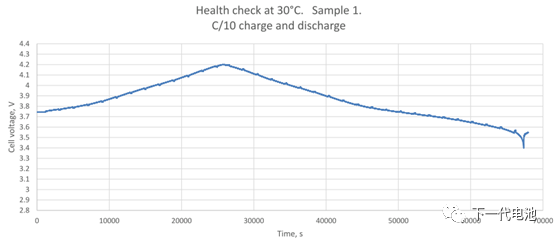
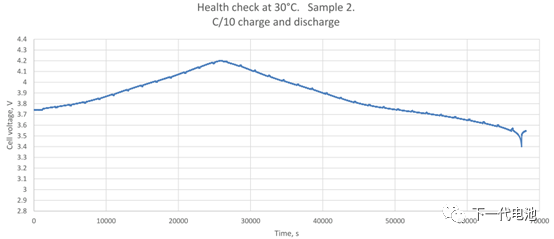
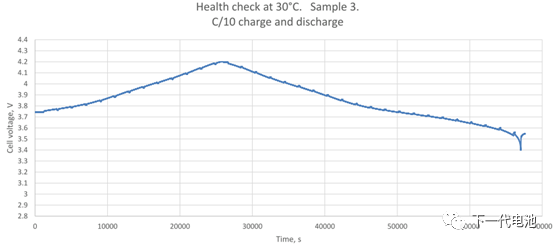
Visually, the consistency of the charge-discharge curves across the three cells is acceptable. The discharge duration is approximately 40,000 seconds (note that the intermittent rest periods must be subtracted for an accurate calculation). Since the protocol only specifies a C/10 rate without providing the nominal current value, the exact capacity remains unknown.
3. QuantumScape Battery Cycle Life Testing
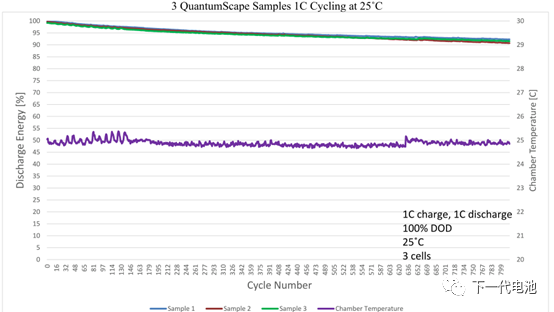
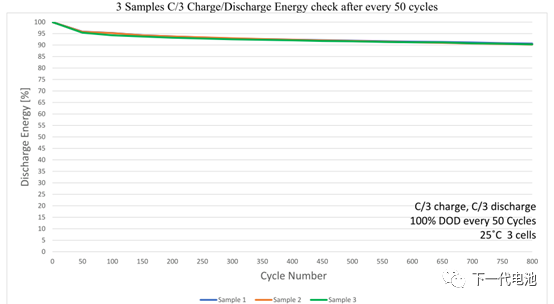
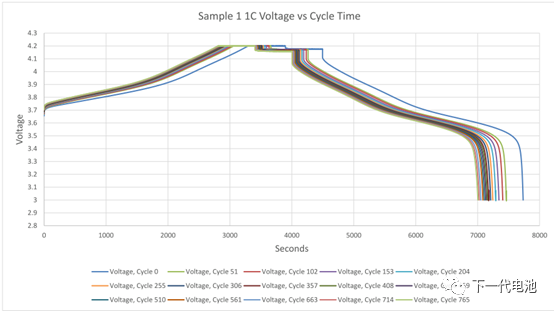
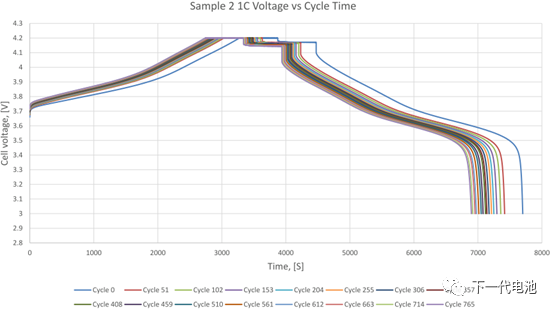
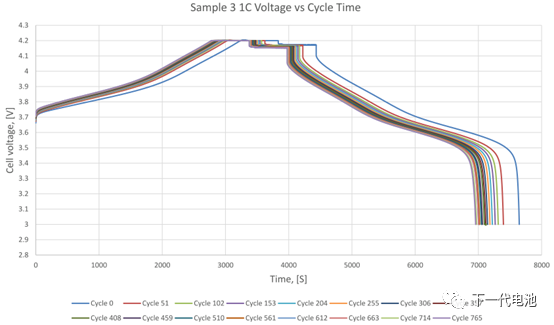
The cycle life testing was conducted at 25°C with the cells secured by metal fixtures (clamping plates). The operating voltage window was set between 3.0V and 4.2V. The cycling protocol involved a 1C CCCV charge to 4.2V, with a cutoff condition of either a C/10 current or a 10-minute duration, followed by a 1C discharge to 3.0V. Every 50 cycles, a C/3 capacity calibration was performed, along with DCIR (Direct Current Internal Resistance) measurements at various SOC (State of Charge) levels. (Regrettably, the report does not disclose the specific DCIR data.)
Based on the 1C cycle discharge energy retention data provided in the report, the cells maintained an energy retention of 90% after 800 cycles.
According to the C/3 calibrated discharge energy retention curves, the cells maintained an energy retention of 90% at C/3 after 800 cycles at a 1C rate. The primary distinction from the 1C data is that the C/3 measurements exhibited a slightly faster initial degradation; however, the curve became relatively flatter in the later stages. By the 800-cycle mark, the C/3 data was essentially consistent with the 1C results.
The three charge-discharge curves provided for the cycling process do not offer a wealth of information. However, the discharge onset voltage is approximately 4.1V, which appears slightly lower than that of conventional NCM (ternary) batteries. This might suggest that the polarization in solid-state batteries is somewhat higher, although this inference may not be strictly conclusive.
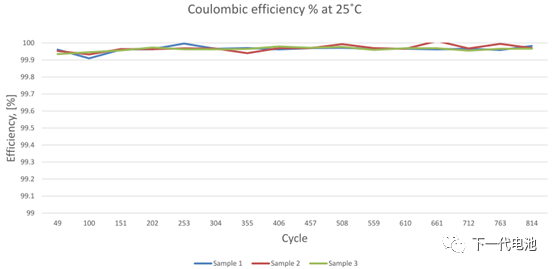
The report concludes by providing the Coulombic Efficiency (CE) during cycling, which exceeded 99.95% after approximately 50 cycles. This high level of Coulombic efficiency is precisely the reason the cells are able to achieve such robust cycle life performance.
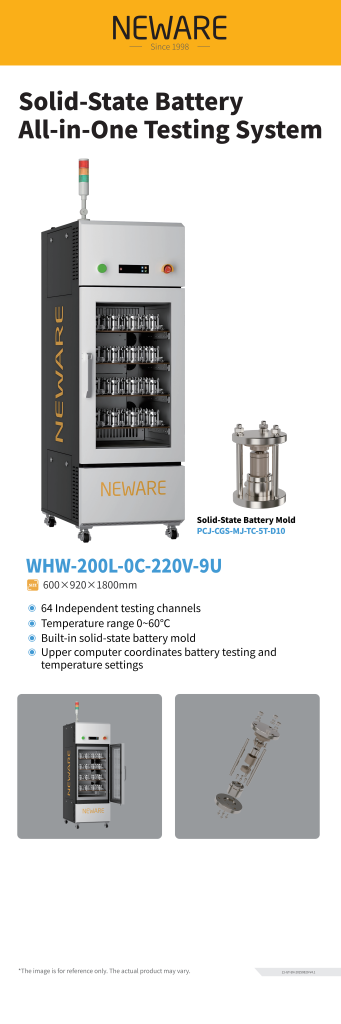
Neware battery testing solutions
Neware All-in-One Battery Test Solution for solid state batteries