
NEWARE BMS Tester is officially launched.
As we know, the BMS (Battery Management System) is the core control unit of a battery pack. It prevents over‑charging / over‑discharging, estimates SOC/SOH (State of Charge / State of Health), monitors voltage and insulation, and performs cell balancing and thermal management. It directly determines battery safety and service life.
With the rapid growth of new‑energy vehicles, energy‑storage systems and smart devices, battery capacity and power density keep increasing. OEMs and battery manufacturers have continuously raised requirements for BMS accuracy, safety and intelligence. The BMS tester is specialized equipment designed to validate and verify BMS performance. It simulates real‑world batteries and operating conditions on a safe, controllable and repeatable platform, to verify whether all BMS functions, performance and safety protections comply with design expectations and regulatory standards.
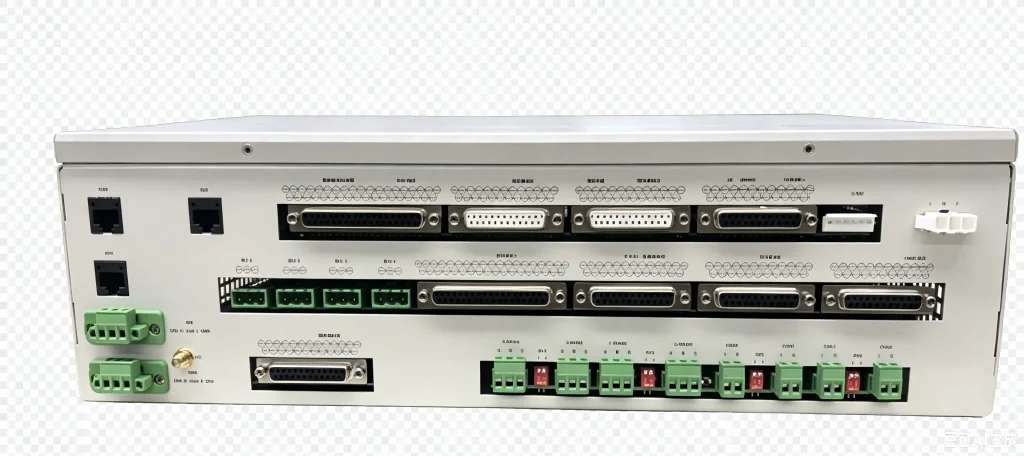
The Neware BMS tester consists of three units:
① Battery Simulation Unit: simulates battery status under various conditions, delivering voltage, current and temperature environments close to real batteries. It verifies BMS balancing functions, charge‑discharge management and SOC calculation accuracy.② Analog Signal Hardware Unit: injects various fault and precision signals (over‑voltage, under‑voltage, over‑current, short circuit, abnormal temperature, sensor failure, etc.) to evaluate the BMS’s capability for detection, protection and fault diagnosis.③ Communication Test Unit: verifies BMS communication stability, anti‑interference performance and fault‑handling mechanisms over CAN, RS485, RS232, I²C, SMBus and other buses.The above three units are composed of battery simulator, programmable high‑voltage constant‑voltage source, BMS‑BKX (AIO board, PWM board, NTC board, BMS communication board), programmable current source and programmable auxiliary power supply.
Currently, the battery simulator supports 16‑channel, 18‑channel and 24‑channel configurations. For channels exceeding 24CH, multiple units can be configured for battery simulation. It is mainly used for tests such as simulating battery balancing strategies, single‑cell fault simulation, and cell‑level accuracy acquisition.
Programmable high‑voltage source: it outputs total voltage for the BMS board to perform total‑voltage simulation and accuracy acquisition. Higher‑voltage and higher‑current sources can be selected according to your requirements. Key specifications of the standard configuration are as follows: voltage range 0‑1000 V, current range 0‑0.9 A, voltage accuracy 0.1%+0.1% FS, current accuracy 0.1%+0.2% FS.
Programmable current source (5V 300A for standard configuration). Higher‑current solutions can be configured based on requirements.
The programmable DC source is used to supply power to the BMS for testing its performance under operating current. Key specifications: Voltage range: 0‑36 V Output current: 0‑10 A Voltage & current accuracy: 0.02% + 2 digits.
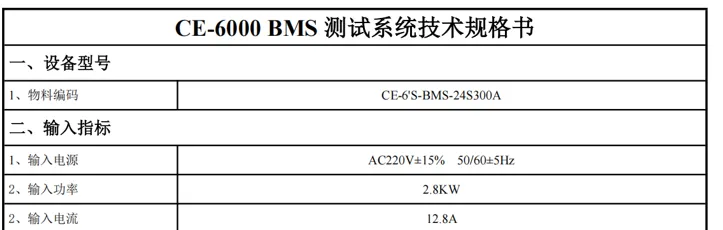
Introduction to Communication Test Items
With communication functions, the test system shifts from passive measurement to active interaction, so as to verify whether the BMS operates normally.
- Basic communication establishment and handshaking. The test system first attempts to establish a communication connection with the BMS. It verifies whether the physical layer (wiring harness, interfaces), link layer (baud rate, protocol format) and application layer (protocol version) work correctly.
- BMS data reading and verification. The test system compares data reported by the BMS with data collected by its own high‑precision measuring devices, including total voltage, total current, cell voltage and temperature.
- BMS status and control function test. Commands are sent to verify if the BMS can correctly execute instructions and switch status, covering relay control, charge‑discharge MOSFET control, sleep and wake‑up.
- Protection‑function verification and fault injection. The test system simulates various fault conditions and monitors the BMS responses via communication.
- Parameter configuration and calibration. Read and write internal BMS parameters, perform calibration, write information and other related operations.
Learn more about NEWARE
You may also be interested in Neware’s EOL testing equipment
Due to my limited expertise and language proficiency, errors and omissions may occur. Should you identify any inaccuracies or potential copyright issues, please contact me via private message. I will rectify or remove the content immediately.