Neware Battery Testing System

NEWS

Home > News

Sodium-ion batteries: present and future 2025

Abstract Energy production and storage technologies have attracted a great deal of attention for day-to-day applications. In recent decades, advances in lithium-ion battery (LIB) technology have improved living conditions around the globe. LIBs are used in most mobile electronic devices as well as in zero-emission electronic vehicles. However, there are increasing concerns regarding load leveling of renewable energy sources and the smart grid as well as the sustainability of lithium sources due to their limited availability and consequent expected price increase. Therefore, whether LIBs alone can satisfy the rising demand for small- and/or mid-to-large-format energy storage applications remains unclear. To mitigate these issues, recent research has focused on alternative energy

5 Useful Tips for Using NEWARE BTS

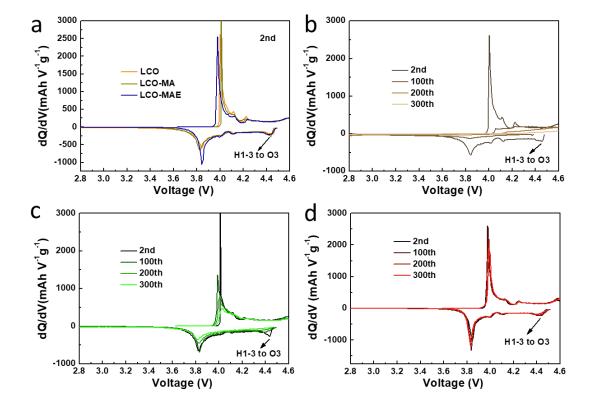
Are you proficient in using Neware's software? Here are 5 useful tips on C-rate, dQ/dV, DCIR, etc. 1 of 5 Useful Tips for Using NEWARE BTS Set Language The second one is Language, Select English.   2 of 5 Useful Tips for Using NEWARE BTS How to set Fonts size and Icon size? Lower Right Corner   3 of 5 Useful Tips for Using NEWARE BTS C-rate setting if you need it “Set”——“System settings”——“Step edit”——find“C-rate” and “Cut-off C-rate” on the right——“〈”——Save In 4 zone, there are a lot of projects you can set up. Give it a try.   4 of 5 Useful Tips for Using NEWARE BTS Do you

Test template

Neware test templates save your time 2025

Neware test templates save your time Single start(S)---Step Management Here are some battery test templates about DCIR, SOC, capacity, GITT test, HPPC test. You can change the parameters to suit the battery or battery material you are testing. You can also save frequently used test steps as templates so that you don't need to repeat the setup, saving you time. Hope it is useful!   About Neware technology Limited Neware was founded in 1998. We are trusted by ATL, BYD, CATL, Tesla, Apple, HUAWEI, SolarEdge, etc. We provide battery testing solutions for testing battery cell, module, pack, supercapacitor, BESS, etc. If you want to do capacity, cycle life, pulse, DCIR,

3 mins to know fast charging battery technology

1.Research background and concept of fast charging battery With the introduction of the "double carbon" goal, a low-carbon trend in global energy and industrial development has emerged. Consequently, utilizing clean energy to power vehicles holds great significance in reducing CO2 emissions and achieving carbon neutrality. Electric vehicles powered by lithium-ion batteries have increasingly drawn attention due to their high energy density, long cycle life, low cost, and minimal environmental pollution. Nevertheless, despite projections that the global electric vehicle fleet will hit 230 million by 2030, both market penetration and consumer acceptance remain relatively low at present. One of the important reasons is mileage anxiety. Therefore, fast charging lithium-ion batteries have become

Wide-Temperature Range Battery

Wide-Temperature Range Battery: Applications for Extreme Environments 2025

1.Research background and concept of wide temperature range battery   Since the 1970s. Lithium-ion batteries have attracted wide attention after researchers found the lithium storage performance of layered oxides and sulfides. Multi-application scenarios not only reflect the advantages of lithium batteries, but also the driving force of their development. As shown in Figure 1, lithium batteries only need to meet the operating temperature of 15~35 °C in applications such as electric vehicles and portable electronic devices. However, in some special application scenarios, lithium batteries are required to break through this temperature range. For example, the oil industry needs lithium batteries to adapt to a working environment of about 80 °C,

energy storage

5 mins Introduction of Pre lithiation

1.Research background and concept of pre lithiation technology With the advancement of technology and the development of society, energy consumption and environmental pollution problems are becoming more and more serious, which has led to the pursuit of efficient and environmentally friendly energy storage solutions. Lithium-ion battery  is one of the most mainstream energy storage devices, and its performance improvement has become a research hotspot. However, traditional methods of enhancing electrode material performance and developing new electrolyte systems have faced limitations. During battery cycling, the irreversible loss of lithium ions severely impacts the energy density and cycle life of the battery. Previous methods for improving battery performance have struggled to meet