Neware Battery Testing System

NEWS

Home > News

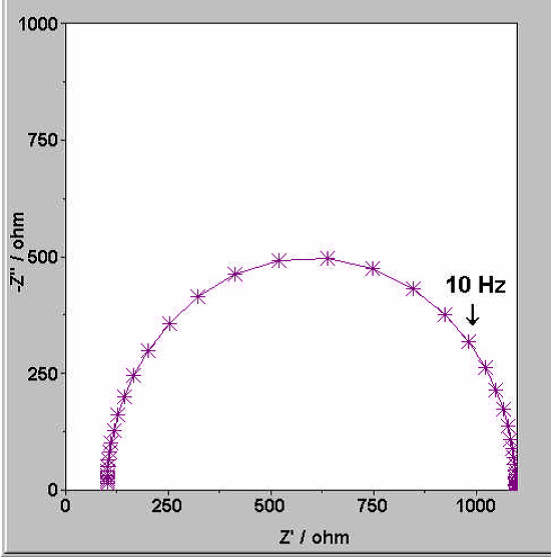
EIS Nyquist plot

Electrochemical Impedance Spectroscopy EIS and AC Voltammetry 2024

Electrochemical Impedance Spectroscopy (EIS)   Electrochemical impedance spectroscopy (EIS) is a robust method for examining how AC impedance varies with frequency in an electrochemical system that’s in a polarization steady state, usually at equilibrium potential. This technique offers crucial insights into electrochemical processes like charge transfer resistance, electrolyte resistance, and double-layer capacitance within the system.   During EIS testing, several challenges may emerge, necessitating appropriate solutions: 1. **Electrode Polarization**: Electrode polarization can notably impact EIS measurements. It can stem from various factors, such as electrolyte resistance, charge transfer resistance, and double-layer capacitance. To counteract this, applying proper calibration methods, like subtracting the electrode polarization contribution from the impedance data, is

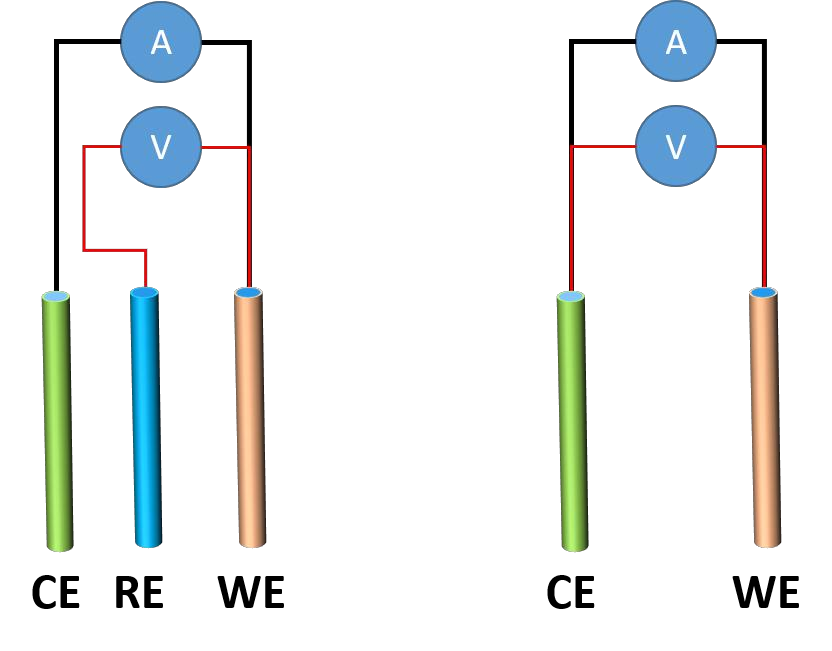
Three-Electrode System

3 mins to learn Different Names of Electrode in Electrochemistry

Counter electrode   A counter electrode is an essential component in electrochemical experiments. It forms a circuit with the working electrode to allow the current to pass, ensuring that the studied reaction occurs on the working electrode.   In electrochemical experiments, a three-electrode system is commonly used, which includes the working electrode, reference electrode, and counter electrode. The working electrode is responsible for the studied reaction, while the reference electrode provides a stable potential as a reference to accurately measure the potential changes on the working electrode. On the other hand, the counter electrode is employed to forms a circuit with the working electrode to maintaining the stability of current.

Three-Electrode System

Battery Science: Introduction to Electrodes 2024

Primary Battery: Technical Overview and Operational Principles Definition and Functional Mechanism A primary battery, frequently categorized as a non-rechargeable galvanic cell, serves as a standalone energy source designed to convert chemical energy into electrical power through spontaneous electrochemical reactions. Unlike secondary cells, these units are engineered for a unidirectional discharge cycle, delivering a consistent current to an external load once the circuit is closed between its two polar terminals. Core Components and Structural Composition The architecture of a primary cell typically integrates one or multiple high-purity chemical active materials. The fundamental electrochemical assembly comprises: The Anode (Negative Electrode): The site where oxidation occurs, releasing electrons to the external circuit. The