Neware Battery Testing System

NEWS

Home > News

Welion

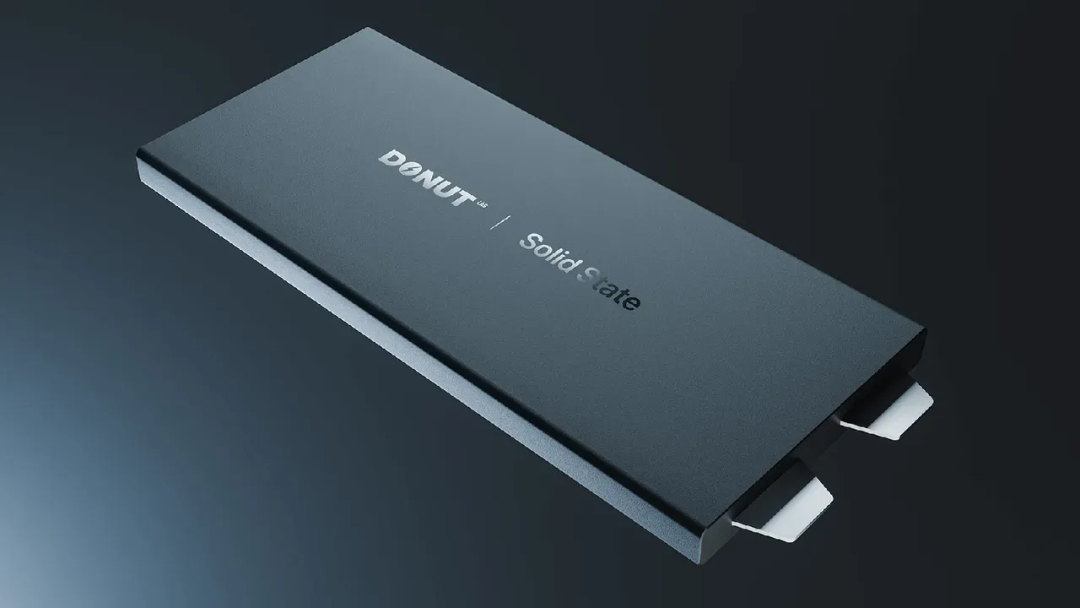
Welion achieves 824 Wh/kg energy density in lab, targets 1000 Wh/kg

Welion achieves 824 Wh/kg energy density in lab, targets 1000 Wh/kg China’s solid-state battery company Welion New Energy Chairman Yu Huigen has revealed a breakthrough in solid-state battery technology, announcing that the company has achieved an industry-leading energy density of 824 watt-hours per kilogram (Wh/kg) in laboratory tests, with future targets exceeding 1000 Wh/kg. Yu stated during a recent TV programme, Dialogue, of Chinese state media CCTV, "Our laboratory tests have demonstrated solid-state batteries with energy densities reaching 824 Wh/kg, and we expect to break the 1000 Wh/kg barrier in the long term" Despite the technical breakthrough, Yu acknowledged that cost factors, particularly expensive raw materials in sulfide-based electrolyte systems,

Anode-Free Battery Doubles Electric Vehicle Driving Range

1270 Wh/L! How Anode-Free Battery Technology Doubles EV Range

Synergistic Coupling of Host and Electrolyte Achieving1270 Wh/L in Anode-Free Battery. Anode-Free Battery Doubles Electric Vehicle Driving Range. POSTECH, KAIST, and Gyeongsang National University achieve a record-breaking energy density of 1,270 Wh/L Key Highlights of Anode-Free Battery Technology Breakthrough Energy Density: Achieved a record-breaking 1,270 Wh/L using Anode-Free Battery Technology. Performance: Nearly double the driving range compared to conventional lithium-ion batteries. Innovation: Successful implementation of a Reversible Host (RH) and Designed Electrolyte (DEL) in Anode-Free Battery Technology. Commercial Viability: Validated in pouch-type cells, moving Anode-Free Battery Technology closer to real-world EV applications.   Could an electric vehicle travel from Seoul to Busan and back on a single charge? Could drivers

Fig. 1. Schematic illustration of the components in a full coin cell

Design, Assembly, and Testing of Full Coin Cells: Tutorials and Case Studies 2026 post

Design, Assembly, and Testing of Full Coin Cells: Tutorials and Case Studies 1. Introduction of Full Coin Cells A full cell is a complete battery system comprising a cathode, anode, separator, electrolyte, and casing. Unlike half-cells, full cells provide an accurate assessment of the electrochemical and mechanical performance of a battery under actual operating conditions. While a half-cell typically utilizes a metal sheet or foil (such as lithium metal) as the counter electrode, a full cell is composed of two active electrodes—one functioning as the cathode and the other as the anode. The design and assembly of a full cell require the consideration of multiple factors, including the selection of

Figure 1. SLP component arrangement with labels for the different sides of the electrodes and the main positive/negative interface at the separator. The electrodes are coated separately. Tabs are ultrasonically welded onto the current collectors before assembly

A Guide to Making Highly Reproducible Li-Ion Single-Layer Pouch Cells for Academic Researchers Published August 23, 2023.

A Guide to Making Highly Reproducible Li-Ion Single-Layer Pouch Cells for Academic Researchers Publication Details Title: A Guide to Making Highly Reproducible Li-Ion Single-Layer Pouch Cells for Academic Researchers Journal: Journal of The Electrochemical Society (Impact Factor: 3.9) DOI: 10.1149/1945-7111/aceffc Research Team: Department of Physics and Atmospheric Science, Dalhousie University, Canada; NOVONIX Battery Technology Solutions. Research Summary: To address the performance gap between the coin cells commonly used in academia and industrial-grade multilayer pouch cells, this study proposes a fabrication method for single-layer pouch cells (SLPs) featuring a no-overhang design. By optimizing electrode alignment and packaging processes, this approach significantly enhances the reliability and industrial relevance of battery testing.  

Figure 5. Representative cyclic voltammograms show the oxidative desorption of MESA from an Au electrode in 0.1 M H₂SO₄ at a voltage scan rate of 10 mV s⁻¹. DOI: 10.1021/jp2105715.

Why is your CV curve asymmetrical? 2026 post

Why is your CV curve asymmetrical? This article provides a detailed introduction to the fundamental principles and applications of Cyclic Voltammetry (CV). It analyzes the symmetry of CV curves, specifically focusing on peak potential separation and peak current ratios, while exploring the underlying causes of asymmetry—such as quasi-reversible and irreversible reactions, coupled chemical reactions, and diffusion- versus adsorption-controlled processes. Finally, the article discusses the practical applications of CV curve asymmetry in evaluating catalyst activity, battery rate performance, and the capacitive characteristics of supercapacitors. What is cyclic voltammetry (CV)? Neware battery cyclers 8002 with CV Cyclic Voltammetry (CV) involves applying a cyclic potential that varies linearly with time to a working

Progress and perspectives on molecular design of crosslinked polymer electrolytes for solid-state lithium batteries

Prof. Yunhui Huang’s Group Leads the Way in Battery Innovation: Key Research Highlights (2025)-3

Prof. Yunhui Huang’s Group Leads the Way in Battery Innovation: Key Research Highlights (2025)-3     21. eScience: Electron beam irradiation for spent LiFePO4 recycling The research team led by Prof. Yunhui Huang and Prof. Yue Shen proposed a direct recycling strategy for lithium iron phosphate (LiFePO4, LFP) based on electron beam irradiation (EBI). The electron beam irradiation selectively degrades the polymeric binders, enabling the highly efficient delamination of LFP from the current collectors. Electron beam irradiation for spent LiFePO4 recycling eScience     22. Electrochemical Energy Reviews: Advancements, Challenges, and Future Trajectories in Advanced Battery Safety Detection The review presented by the research team of Prof. Yunhui Huang and Prof. Ming