Neware Battery Testing System

NEWS

Home > News

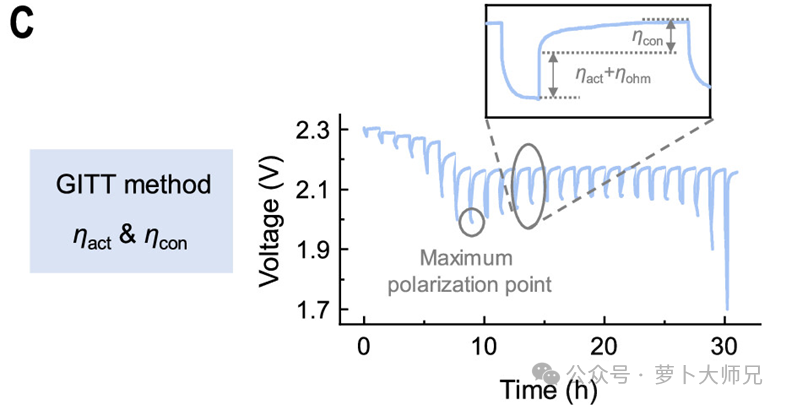
GITT time-voltage curves (J. Am. Chem. Soc. 2025, 147, 18, 15435–15447)

How to set GITT test on Neware BTS for lithium-sulfur batteries? 2026 update

When I asked Google Gemini, how to set GITT test for lithium-sulfur batteries and how to set them on Neware battery testing system? Its answer is: For Lithium-Sulfur (Li-S) batteries, the GITT test is more complex than standard intercalation materials because of the liquid-to-solid phase transitions. Below is the guide for parameter settings and the configuration process in the Neware BTS software.   I. GITT Parameter Design for Li-S Batteries Unlike Li-ion batteries, Li-S cells involve the shuttle effect and viscosity changes in the electrolyte. Therefore, the parameters must be set to capture the equilibrium potential accurately. And 5. Data Logging: Every 5 – 10 seconds or Delta V =
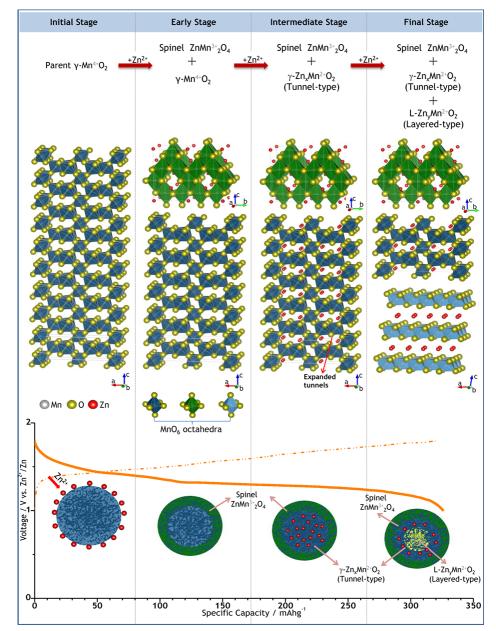
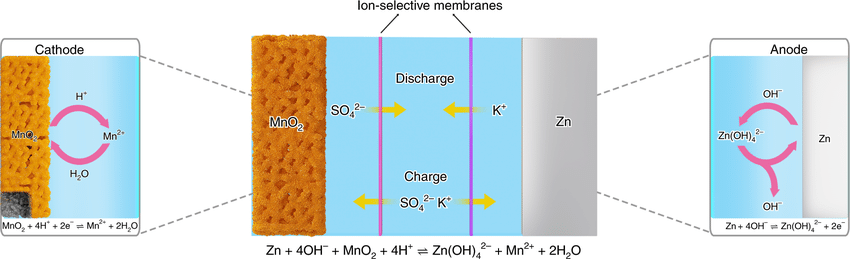
Figure 2. Schematic illustration of the reaction pathways for Zn insertion in the as-prepared γ-MnO2 cathode.

Zn//MnO2 battery from Primary to Rechargeable: A Timeline of Key Breakthroughs in Aqueous Zinc-Ion Batteries (AZIBs) 2026 post

Zn//MnO2 battery from Primary to Rechargeable: A Timeline of Key Breakthroughs in Aqueous Zinc-Ion Batteries (AZIBs) For renewable energy to be truly viable, safe, low-cost, and scalable energy storage is essential. Aqueous Zinc-Ion Batteries (AZIBs) have entered the spotlight due to their non-flammable nature, eco-friendly raw materials, and high ionic conductivity. Through a comprehensive timeline, this article briefly outlines the critical milestones and methodologies that transformed the Zn//MnO2 (Zinc-Manganese) system from a primary cell into a rechargeable powerhouse. Why is everyone refocusing on our “old friend,” the zinc-manganese battery? The answer goes beyond mere “safety and affordability.” When researchers shifted their focus to the crystal framework of MnO2 and the chemical windows

Working mechanisms of our Zn–MnO2 battery Schematic diagram

How do aqueous zinc-ion batteries relate to traditional Zn//MnO₂ electrochemical systems? 2026 post

How do aqueous zinc-ion batteries relate to traditional Zn//MnO₂ electrochemical systems? Understanding the Link: Traditional Zn//MnO₂ Batteries vs. Modern Aqueous Zinc-ion Batteries (AZIBs) In the rapidly evolving world of energy storage, the “Zinc-Manganese” system is experiencing a significant renaissance. While most consumers are familiar with the classic Zn//MnO₂ alkaline battery used in household remotes, researchers are now pivoting toward the Aqueous Zinc-ion Battery (AZIB) as a sustainable alternative to Lithium-ion. What is an Aqueous Zinc-ion Battery (AZIB)? An Aqueous Zinc-ion Battery (AZIB) is a type of secondary (rechargeable) energy storage system that utilizes zinc ions ($Zn^{2+}$) as the charge carriers, moving between a zinc metal anode and an intercalation cathode

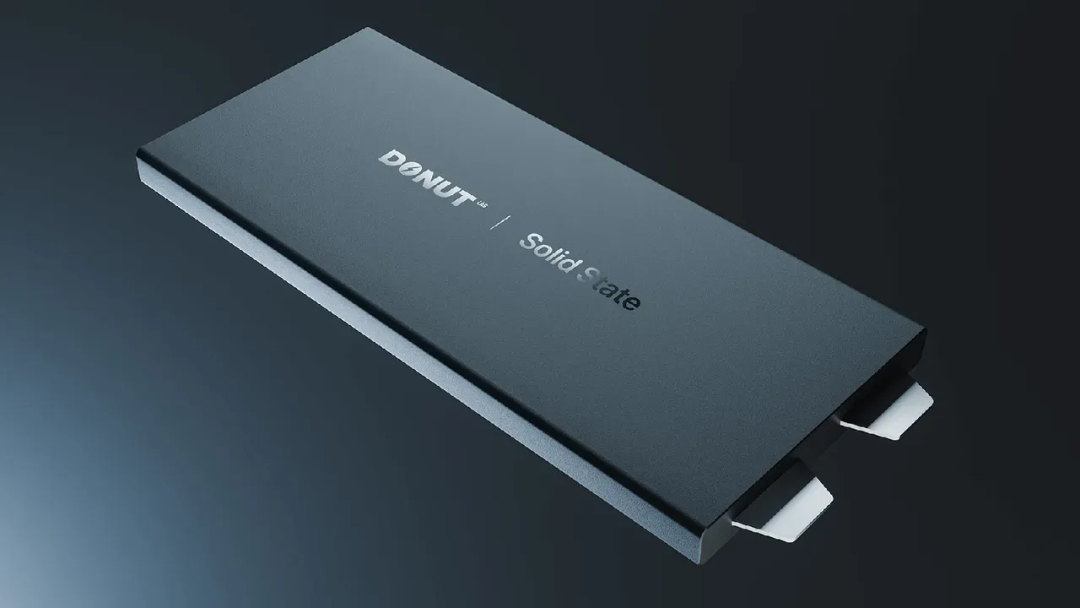
Donut‘s supercapacitor or an all-solid-state battery

Is this a supercapacitor or an all-solid-state battery? 2026 post

New post from WeChat Official Account: Lithium Matters (言之成锂) Is this a supercapacitor or an all-solid-state battery? 2026 post Donut’s latest all-solid-state battery has been going viral across the internet over the past few days. Simultaneously, it has sent shockwaves through the overseas battery community. The performance data they released is simply mind-blowing—so incredible that it feels like technology from another planet.   A friend of mine, James—an industry veteran in the battery sector based abroad—has conducted an in-depth investigation and interpretation of this company and its newly released products. His detailed analysis is as follows: The specifications for Donut’s all-solid-state battery are as follows: Energy Density: 400 Wh/kg; Fast

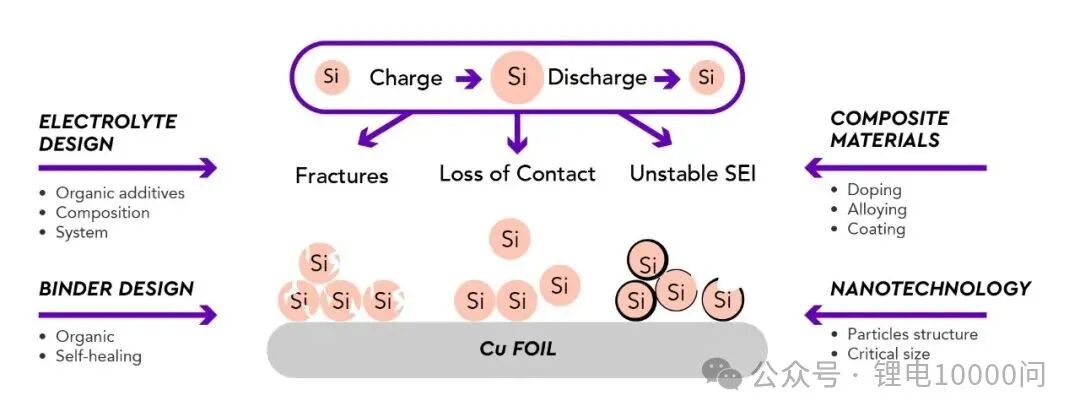
Silicon vs. Graphite The Micro-War Defining the Future of Battery Performance

Silicon vs. Graphite: The Micro-War Defining the Future of Battery Performance 2026 post

Silicon vs. Graphite: The Micro-War Defining the Future of Battery Performance Under the microscope, silicon and graphite particles act like two athletes with starkly different temperaments, collaborating yet competing fiercely on the charging and discharging stage; the fate of the battery hinges on the outcome of this microscopic gambit. The composite electrode is formed by mechanically blending nano-silicon particles with micron-sized graphite particles, yielding electrochemical performance that is significantly superior to that of single-material batteries.   Silicon boasts a staggering theoretical capacity of 3,579 mAh/g—nearly ten times that of traditional graphite anodes—positioning it as a pivotal material for achieving high-energy-density batteries. By optimizing the competitive interplay between silicon and graphite,

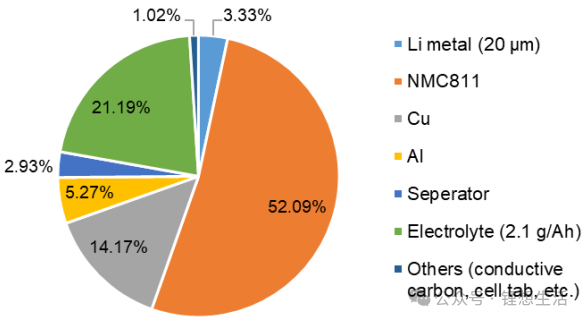
Fig. 2 Component mass distribution of the battery with a 20 μm lithium anode

Design Details of CATL’s Anode-Free Battery 2025

On April 21, 2025, at its Super Technology Day, CATL officially unveiled its “Self-Generated Anode” (SGA) technology. This innovation eliminates the use of traditional materials like graphite as the anode. Instead, by precisely controlling the deposition process of metallic elements (such as Lithium or Sodium), it forms a uniform and dense metallic layer directly on the current collector surface, significantly boosting the battery’s energy density. Through nanoscale interface structural design, the technology optimizes ion conduction paths, ensuring stable metal deposition during charge and discharge cycles while minimizing side reactions and active ion loss. This breakthrough addresses the long-standing challenge of cyclic degradation in lithium-metal anodes. Consequently, the ion conduction rate