Neware Battery Testing System

NEWS

Home > News

Pouch cell

Case Study on Pouch Cell Testing and Analysis 2026 post

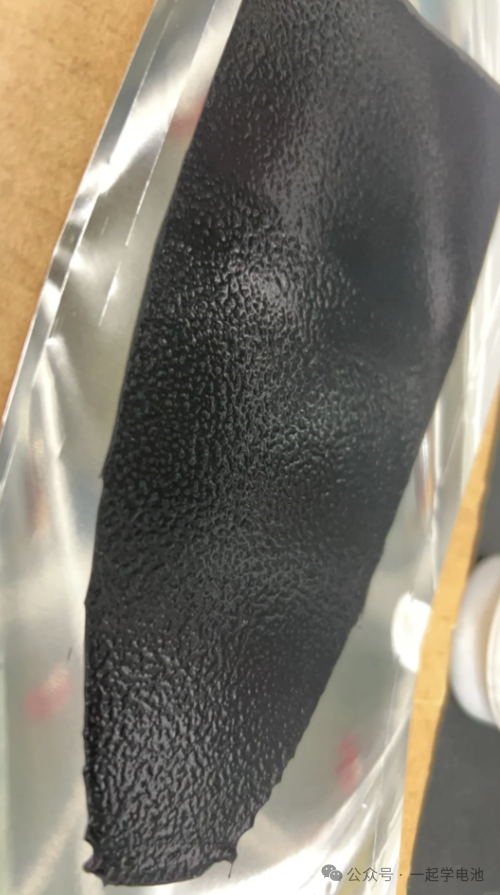
Case Study on Pouch Cell Testing and Analysis Source: WeChat Official Account “New Energy Era” 新能源时代 Pouch Cell Testing and Analysis Report 1. Test Objects A comprehensive test was conducted on two pouch cells, covering external dimensions, electrochemical performance, battery design, and material composition. The test parameters were set as follows: Charge Cut-off Voltage: 4.2 V Discharge Cut-off Voltage: 2.75 V Testing Conditions: Capacity Grading, Low-Temperature, and Safety Tests: Conducted at a 1C current. Cycle Life Test: Conducted at a 3C current.   2. External Dimensions Pouch cell 1# This battery is 118mm long, 40mm wide, and 10mm thick, with an internal resistance of 1.7mΩ and a voltage of 3.812V.

CATL’s -30°C Sodium-Ion Battery, 800km Driving Range?!

Source: WeChat Official Account “Electric Vehicle Commune” 电动车公社 Hello everyone, I am the President of the Electric Vehicle Commune. 2025 can be described as a year of critical milestones for China’s new energy vehicles (NEVs). According to statistics from the China Passenger Car Association (CPCA), the retail penetration rate of NEV passenger vehicles grew to 54% in 2025. This marks the first time it has surpassed the 50% threshold, setting a new historical record—a 6.4 percentage point increase compared to 47.6% in 2024. This signifies that in the passenger vehicle sector, NEVs have become the primary choice for car buyers, while internal combustion engine (ICE) vehicles have officially become the

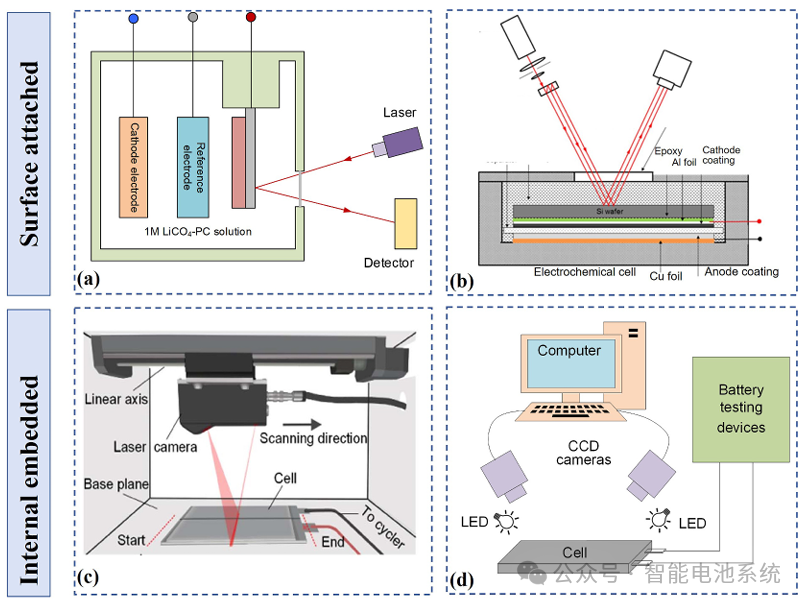
Figure 1 LSV test setup

Test procedures for LSV and coulombic efficiency of lithium copper batteries 2026 post

Sharing the testing procedures for coulombic efficiency of lithium copper batteries and LSV. Source: WeChat Official Account “Brother Radish” 萝卜大师兄 Lbdsx and Google Gemini. Today I’m sharing the testing procedures for the coulombic efficiency (CUE) and LSV of lithium-copper batteries.   What is LSV? In the field of lithium metal battery research, LSV (Linear Sweep Voltammetry) for lithium-copper (Li-Cu) asymmetric cells is primarily used to evaluate the electrochemical stability window of the electrolyte and to observe the lithium nucleation process. Unlike a standard charge/discharge test, LSV involves sweeping the potential at a constant rate to observe where the electrolyte begins to decompose or where lithium begins to plate onto the

Assessing Coulombic Efficiency in Lithium Metal Anodes

Reference for Li-Cu Battery Testing: Assessing Coulombic Efficiency in Lithium Metal Anodes 2026 post

Reference for Li-Cu Battery Testing: Assessing Coulombic Efficiency in Lithium Metal Anodes Team of Professor Lorenzo Stievano, University of Montpellier, France – Chemistry of Materials   Abstract Although lithium metal and anode-free rechargeable batteries (LMBs and AFBs) are phenomenal energy storage systems, the formation of lithium deposits with high surfaces during repeated plating–stripping cycles has hindered their practical applications. Recently, extensive efforts have been made to prevent the growth of high-surface lithium deposition, e.g., electrolyte modification, artificial coating deposition, lithiophilic current collectors, composite lithium metal electrodes, etc. In most of these approaches, Coulombic efficiency (CE) has been used as a quantifiable indicator for the reversibility of the LMBs and AFBs.

Figure 2. Shuttle current test results (Reference: Adv. Mater. 2025, 37, 2501869)

How to set Shuttle Current Test on Neware BTS for lithium-sulfur batteries? 2026 update

How to set Shuttle Current Test on Neware BTS for lithium-sulfur batteries? What is Shuttle Current Test? The following information comes from Google Gemini and my friends who research lithium-sulfur batteries.   I asked Google Gemini: How to set Shuttle Current Test on Neware BTS for lithium-sulfur batteries? What is Shuttle Current Test? What is the Shuttle Current Test in Lithium-Sulfur Batteries? In Lithium-Sulfur (Li-S) battery research, the Shuttle Current Test is the primary quantitative method used to evaluate the severity of the “polysulfide shuttle effect.” Because long-chain lithium polysulfides (LiPS) are highly soluble in organic electrolytes, they tend to migrate between the cathode and anode. This parasitic movement causes

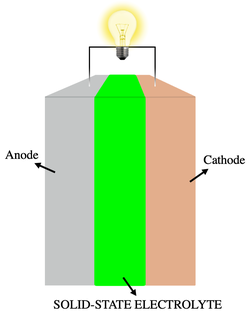
All Solid-State Battery with the solid-state electrolyte.

Routine Electrochemical Testing of Solid-State Electrolytes 2026 post

Routine Electrochemical Testing of Solid-State Electrolytes Routine Electrochemical Testing of Solid-State Electrolytes Google Gemini’s answer is In solid-state battery research, a series of standardized electrochemical tests are conducted to fully evaluate the performance of solid-state electrolytes (SSEs). These tests characterize ion transport, electrochemical windows, interfacial stability, and dendrite suppression capabilities. Ionic Conductivity Testing Measured via Electrochemical Impedance Spectroscopy (EIS) using symmetric stainless steel cells. The bulk resistance is determined from the high-frequency intercept on the Nyquist plot and used to calculate conductivity based on sample dimensions. Electronic Conductivity Testing Conducted using DC polarization (blocking electrode method). By applying a small constant voltage and measuring the leakage current, the electronic conductivity