
Solid-State Battery Testing: Why a Coin Cell Is Not Always the Right Tool
For many battery R&D teams, the first step is still a coin cell. It is fast, compact and convenient for initial material screening. But when you move from quick feasibility tests to more reliable solid-state validation, the test setup itself can become a limiting factor.
When a coin cell may still be enough
For polymer, gel and some composite electrolyte systems, a coin cell can be a practical option for preliminary screening, especially when the material has relatively good flexibility and lower sensitivity to stack pressure.
However, for sulfide and oxide ceramic electrolytes, the requirements become stricter.
Why dedicated pressurized fixtures matter
Sulfide electrolytes are often moisture-sensitive and can be sensitive to interfacial contact stability. Without consistent stack pressure, the interface may loosen during cycling, leading to rising impedance and less repeatable results.
Oxide ceramic electrolytes are usually harder and more brittle. They need uniform, controlled loading rather than uneven or excessive pressure, which can help reduce local stress and crack risk.
A dedicated solid-state pressurized fixture is designed to support more stable loading, controlled testing conditions and better data consistency—especially for long-cycle evaluation, low/high-temperature tests and formal lab validation. It can also be more convenient to use together with glovebox assembly for air- and moisture-sensitive materials.
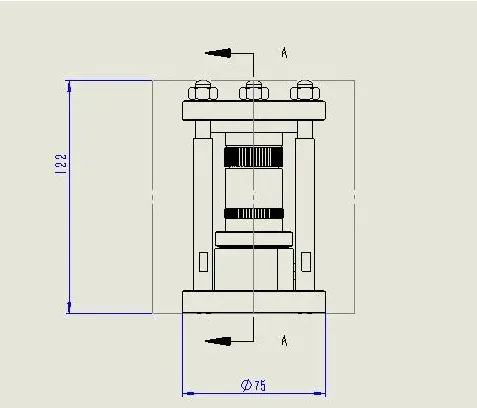
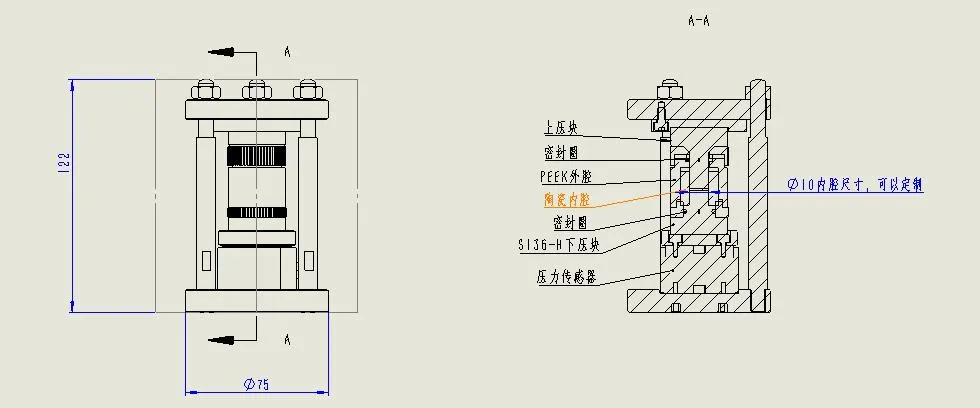
Our solid-state battery pressurized test fixture:
– Active area: φ10 mm (customizable)
– Fixture size: φ75 × 122 mm (adjustable on request)
– Pressure range: 50–5000 kg (up to 5 T capacity)
– Pressure accuracy: ±0.3%
– Temperature range: -40 °C to 150 °C (high-temp customization available)
– Polished contact surface
– Optional pressure sensor / PC or meter display
– Suitable for sulfide, oxide, semi-solid and all-solid-state R&D
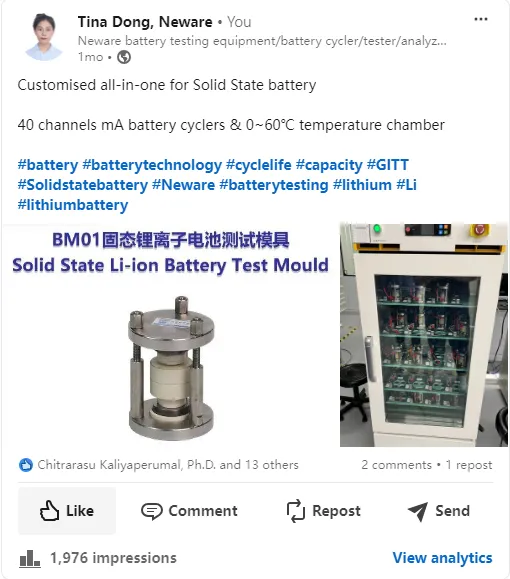
Whether you are building a solid-state lab, comparing electrolyte systems or trying to improve test repeatability, choosing the right fixture can make a meaningful difference before you interpret the cell data.
Feel free to contact us for more details, custom options or application support.