Neware Battery Testing System

NEWS

Home > News

Advancements in Anode Materials of Lithium-Ion Batteries

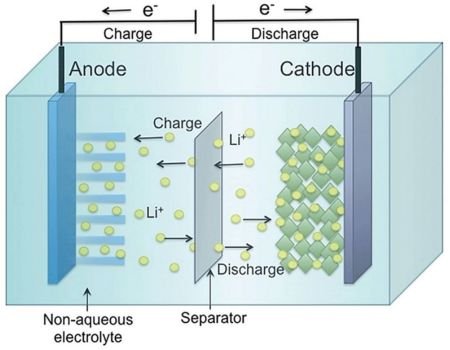
Overview of anode materials of lithium-ion batteries In 1989, SONY company found that petroleum coke carbon materials could be used to replace metal lithium to make secondary batteries, which really opened the prelude to the large-scale application of lithium-ion batteries. In the next 30 years, three generations of products such as carbon, lithium titanate and silicon-based materials have been used as anode materials. This article will briefly introduce various lithium-ion battery anode materials according to the structural classification of anode materials. Characteristics of ideal anode materials The ideal anode material should have the following characteristics: 1.Low lithium insertion potential: To ensure a higher output voltage (the potential of the lithium

A Guide to the Application and Customization of Three-Electrode Systems In Battery Testing

In the development and production of batteries, the three-electrode test system is an important analytical tool for accurately measuring and analyzing the electrochemical properties of battery electrodes. Compared with the traditional two-electrode system, the three-electrode system can better dissect the electrode behavior and reaction kinetics in batteries, and is therefore widely used in material testing and pole-and-ear cell testing. In this paper, we will introduce in detail the principle, working mechanism, application scenarios, equipment and fixture selection of three-electrode testing, as well as the influence of pole-ear design in three-electrode testing, safety considerations, and the need for equipment features.   1. Three-electrode material testing 1.1 Principle of three-electrode testing A

Discovering Atomic Force Microscopy: Principles and Applications

The Atomic Force Microscope (AFM) is a high-resolution scanning probe microscopy technique, jointly invented by Gerd Binnig, Heinrich Rohrer, and Calvin Quate in 1986. AFM operates by measuring the interaction forces between a sharp probe mounted on a microcantilever and the surface of a sample. This method allows for the detection of surface topography and physical properties of the sample at the atomic level. The working principle of AFM In an atomic force microscope (AFM), one end of a highly sensitive microcantilever is fixed, while the other end features a tiny probe tip that makes gentle contact with the sample surface. Owing to the extremely weak repulsive forces between the

A Comprehensive Guide to Cyclic Voltammetry(CV)

Cyclic Voltammetry (CV) is a technical method for studying the behavior, kinetics, and rate-determining steps of electrochemical reactions at the electrode/electrolyte interface. This method is simple to test, rapid in response, and provides rich information from the cyclic voltammograms obtained. It has a wide range of applications in the fields of materials science, chemistry, environmental science, and biochemistry. Particularly, it is indispensable for advancing knowledge and technological progress in the field of electrochemistry. Through Cyclic Voltammetry, one can determine electrode reversibility, electrode reaction mechanisms, and perform quantitative analysis in electrochemical experiments.     1. The principle of cyclic voltammetry Cyclic Voltammetry (CV) is an electrochemical analysis technique that studies the

What Are Temperature Effects on Batteries?

Temperature has a significant impact on battery performance, particularly in lithium-ion batteries, which are widely used in various applications due to their high energy density and stability. Here’s a detailed overview of the effects of temperature on batteries. Performance at High Temperatures High temperatures, especially above 35°C (95°F), can accelerate chemical reactions within the battery, leading to faster degradation and reduced lifespan .Overheating can cause thermal runaway, a dangerous condition where the battery can catch fire or explode . Prolonged exposure to high temperatures also increases safety risks and can lead to device failure . Performance at Low Temperatures Low temperatures, particularly below 0°C, impair charging efficiency as the internal

Unlocking the Universe of Elements: An Insight into ICP-MS Technology

The basic introduction of inductively coupled plasma mass spectrometry (ICP-MS) Inductively coupled plasma mass spectrometry is an analytical technique that combines ICP technology with mass spectrometry. ICP-MS is an inorganic element and isotope analysis and testing technology developed in the 1980s. It combines the high-temperature ionization characteristics of inductively coupled plasma with the advantages of sensitive and rapid scanning of mass spectrometer with unique interface technology to form a high-sensitivity analysis technology. Since the advent of the first commercial instrument in 1984, this technology has been rapidly developed from the initial application in geological science research to widely used in materials, chemical industry, biology, medicine, metallurgy, petroleum, environment and other