Neware Battery Testing System

NEWS

Home > News

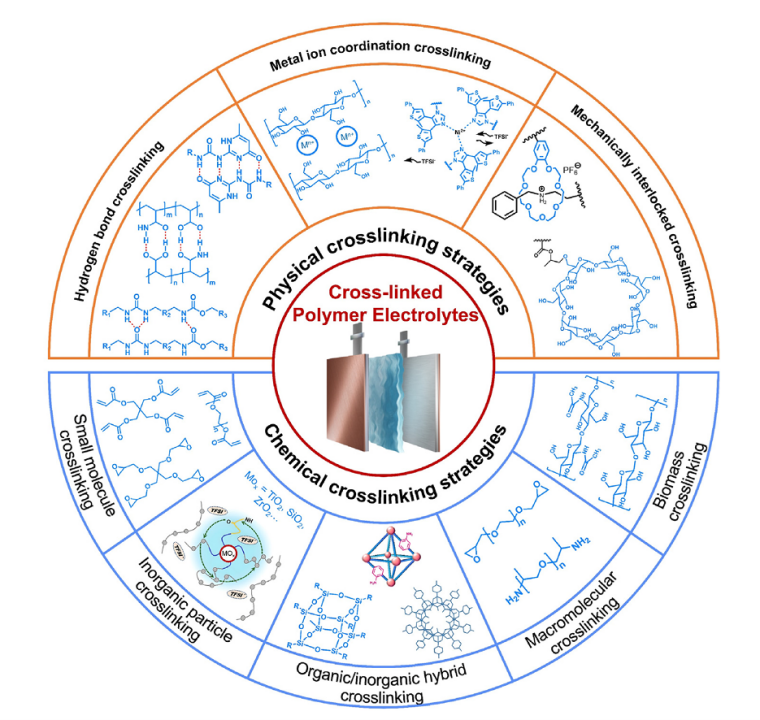
Progress and perspectives on molecular design of crosslinked polymer electrolytes for solid-state lithium batteries

Prof. Yunhui Huang’s Group Leads the Way in Battery Innovation: Key Research Highlights (2025)-3

Prof. Yunhui Huang’s Group Leads the Way in Battery Innovation: Key Research Highlights (2025)-3     21. eScience: Electron beam irradiation for spent LiFePO4 recycling The research team led by Prof. Yunhui Huang and Prof. Yue Shen proposed a direct recycling strategy for lithium iron phosphate (LiFePO4, LFP) based on electron beam irradiation (EBI). The electron beam irradiation selectively degrades the polymeric binders, enabling the highly efficient delamination of LFP from the current collectors. Electron beam irradiation for spent LiFePO4 recycling eScience     22. Electrochemical Energy Reviews: Advancements, Challenges, and Future Trajectories in Advanced Battery Safety Detection The review presented by the research team of Prof. Yunhui Huang and Prof. Ming
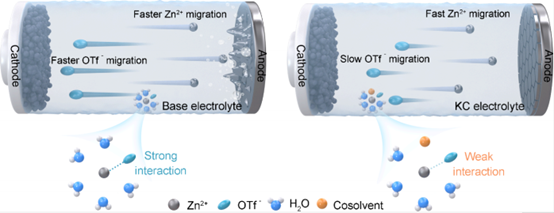
Kinetics Compensation Mechanism in Cosolvent Electrolyte Strategy for Aqueous Zinc Batteries

Prof. Yunhui Huang’s Group Leads the Way in Battery Innovation: Key Research Highlights (2025)-2

Prof. Yunhui Huang’s Group Leads the Way in Battery Innovation: Key Research Highlights (2025)-2 11. Journal of the American Chemical Society: Kinetics Compensation Mechanism in Cosolvent Electrolyte Strategy for Aqueous Zinc Batteries Professor Yunhui Huang’s team from Huazhong University of Science and Technology has addressed the inevitable kinetic losses associated with the introduction of co-solvents. They proposed a kinetic compensation mechanism designed to weaken cation-anion interactions and increase the Zn2+ transference number, thereby partially offsetting the kinetic degradation caused by co-solvents. Using an Zn(OTf)2 based aqueous electrolyte containing ethylene carbonate (EC) as a model system, the team demonstrated the effectiveness of this strategy in achieving kinetic compensation and enhancing the

Smart batteries: materials, monitoring, and artificial intelligence

Prof. Yunhui Huang’s Group Leads the Way in Battery Innovation: Key Research Highlights (2025)-1

Prof. Yunhui Huang’s Group Leads the Way in Battery Innovation: Key Research Highlights (2025) Professor Yunhui Huang | Academic Biography Yunhui Huang is a Professor at Huazhong University of Science and Technology (HUST), where he also serves as the Vice Chair of the University Academic Committee. He is a recipient of several of China’s most prestigious academic honors, including the Changjiang Distinguished Professorship, the National Science Fund for Distinguished Young Scholars, and the National Talent Project of the New Century. He is also a recipient of the State Council Special Allowance. Professor Huang’s expertise is recognized at the national policy level, having served as a subject expert for the “863”

Battery in bad environment

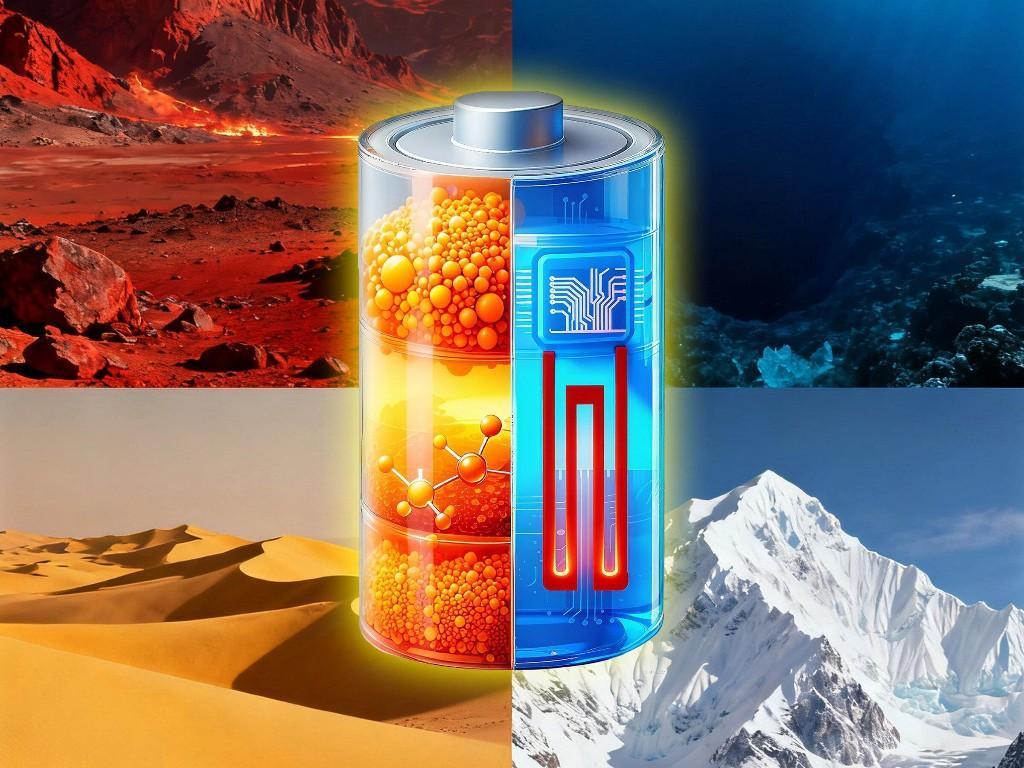
How to Ensure the Reliability of Lithium-ion Batteries in Extreme Environments?

Ensuring Lithium-ion Battery Reliability: Safety Mechanisms and Failure Analysis in Extreme Environments With the widespread adoption of lithium-ion batteries (LIBs), their safety performance under extreme conditions has become a focal point of industry concern. As the core component of new energy technologies, the reliability of LIBs is directly linked to the safety and efficiency of critical sectors, including electric vehicles (EVs) and energy storage systems (ESS). I. Failure Mechanisms in Extreme Environments Lithium-ion batteries undergo complex electrochemical degradation when exposed to thermal extremes: Low-Temperature Environments (e.g., -40°C): At sub-zero temperatures, the electrolyte viscosity increases significantly, leading to higher ionic transport resistance and a sharp decline in discharge capacity. Concurrently, non-uniform

“Silent Alarms” in NCM Batteries: How 6 Key Gases Dictate Battery Safety and Longevity

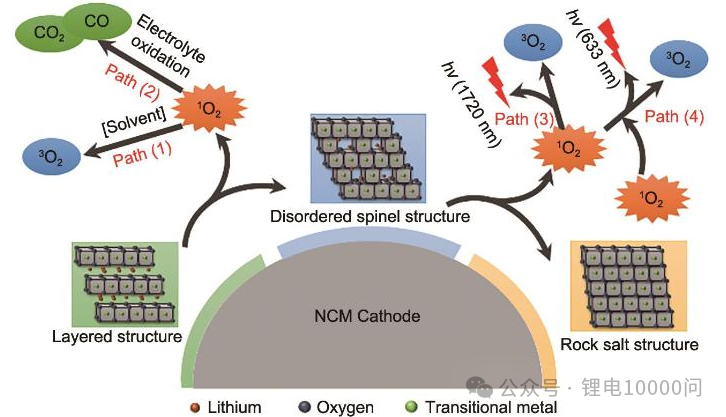
“Silent Alarms” in NCM Batteries: The Interplay Between Gas Generation, Battery Safety, and Battery life During the battery formation stage—the final step before a brand-new NCM (Ternary) battery leaves the factory—the volume of gas discharged is enough to make any engineer frown with concern. These invisible gases are quietly dictating the battery’s future lifespan and its safety boundaries. As the market share of New Energy Vehicles (NEVs) surges, batteries now account for over 50% of a vehicle’s total cost, making safety and longevity the top priorities for consumers. Ternary lithium batteries, particularly high-nickel systems, are widely favored for their high energy density. However, the gas evolution that occurs during cycling

How to make a coin cell

How to make a coin cell?

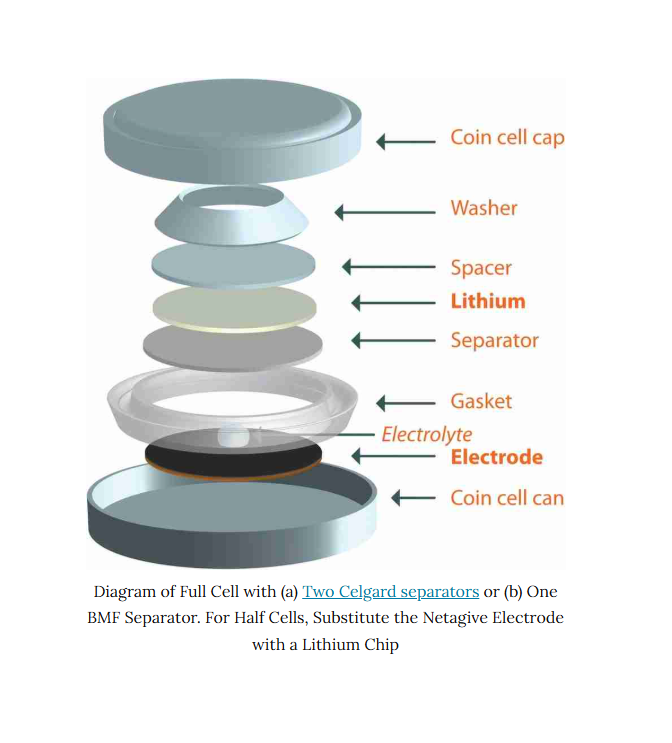
How to make a coin cell? The following are the materials, equipment, and assembly steps required to make a coin cell. The performance of new battery materials in lithium-ion batteries is usually evaluated with hand-made half coin cells with the new material as the positive electrode and a piece of lithium chip as the negative. Half coin cells are easy to make and can give reproducible data. A full cell in the form of coin cells or pouch cells would more accurately predict the performance of active materials in real lithium-ion batteries. PPE: Lab goggles Gloves Lab coat N95 respirator (optional) Materials: Electrode powder: LiCoO2 (cathode) Si (anode) Acetylene black