Neware Battery Testing System

NEWS

Home > News

Zinc Batteries

Optimizing Zinc Batteries: From Anode Materials to Performance Data Analysis 2026

Optimizing Zinc Batteries: From Anode Materials to Performance Data Analysis Source: WeChat Official Account “Learn Batteries Together”  来源于微信公众号 一起学电池 Research on Zinc Batteries Anodes Zinc Batteries Anodes: The construction of an artificial interface layer enables uniform Zn²+ deposition by providing spatial shielding and guiding homogeneous ionic diffusion. Spatial shielding utilizes the interface layer to physically block dendrite growth directly. Guiding uniform Zn²+ diffusion is achieved through mechanisms such as electrostatic interactions, chemical adsorption, and the construction of ion transport channels (ion tunnels). Artificial Interface Layer: Organic materials—specifically integrated thin films characterized by highly reversible shape changes and covalent bond cross-linking—serve as excellent candidates for artificial interface layers. The figure illustrates an all-in-one

The Impact of Temperature on Battery Testing

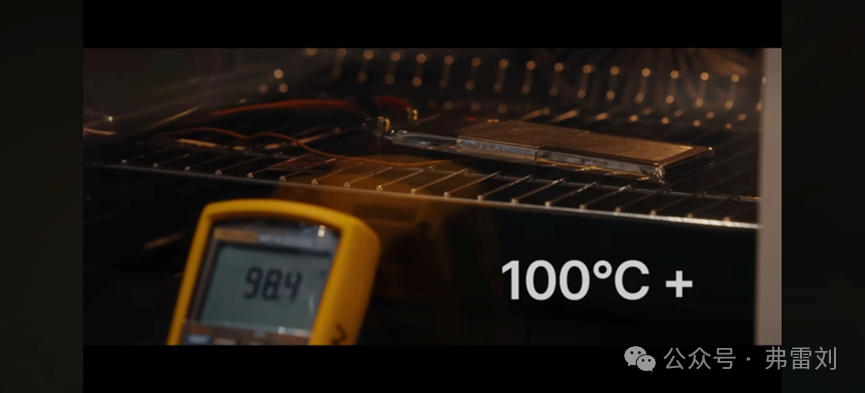
Temperature has a significant impact on battery performance. A battery releases energy through electro-chemical reactions and these reactions are encouraged by higher ambient temperatures. Different battery chemistries have different ranges of optimal operating temperatures. Depending on the application or the climate that the battery will be used in, they would be required to operate in higher or lower temperatures.   However, operating batteries at extreme temperatures also comes with risks. At higher temperatures, there is a reduction in internal resistance, which means higher electron mobility and greater charge/discharge rates. Nevertheless, studies have also shown operating a battery at elevated temperatures speeds up degradation, diminishing the cell’s life cycle.   Continuous exposure to high temperatures can also cause unwanted

NEWARE all in one

Neware Climate Chamber Set Up 2026 Update

Neware Climate Chamber Set Up 2026 Update Neware temperature chamber can be controlled on BTS 8.0 via TCP/IP communication, offering significant convenience for tests that require temperature variations across different cycles. Here’s an example demonstrating the software setup with the 200L all-in-one Battery Test Solution ( WHW-200L-0C-220V-5V100mA-160CH ). 1. Hardware Connection 1.1 Ethernet wire connection For a single all-in-one chamber, connect the Ethernet cable directly to the computer’s TCP/IP port. For multiple chambers and testers, connect all Ethernet cables through a network switch.   2. Network Configuration 2.1 Record needed IP address On the display screen, click the green button to view the chamber’s IP address and port. In this

Neware EOL End of Line battery testing system

Neware End of line (EOL) testing equipment 2026 update

Neware End of line (EOL) testing equipment 2026 update EOL (End of Line) testing is the final testing stage in the battery production process. Objective: To ensure that every battery pack meets functionality, safety, and performance requirements before leaving the factory. Testing Goals: Ensure Product Safety and Reliability: Guarantee that products are safe and reliable upon shipment. Early Detection of Manufacturing Defects: Identify defects early to reduce the risk of recalls.   1. Neware End of line (EOL) Testing Equipment List and Functions Equipment Name Model Functional Description Safety Compliance Tester Chroma 19073 Insulation Resistance, Dielectric Withstand (Hipot) Testing Digital Multimeter Agilent 34461A Precision Voltage / Current / Resistance Measurement

Figure 8. Battery volume changes detected by laser and camera: (a) Electrode strain detected by laser beam deflection; (b) Multi-beam sensing method; (c) Laser camera scanning; (d) Digital image correlation system.

Cracking the Battery Safety Puzzle Published in 2024

Cracking the Battery Safety Puzzle: The Technological Evolution from Single Monitoring to Multidimensional Perception Source: WeChat Official Account Smart Battery System 来自微信公众号 智能电池系统 Frequent safety accidents in lithium-ion batteries have exposed a fatal flaw in traditional Battery Management Systems (BMS): they rely solely on external electrical parameters and surface temperature monitoring, failing to perceive the true internal state of the battery. Critical early warning signals, such as internal temperature gradients, stress accumulation, and gas evolution, are often overlooked. Meanwhile, the application of fast-charging technology and high-energy-density batteries has made the internal electrochemical-thermal-mechanical-gas coupling processes even more complex. How to break through the “information barriers” of traditional monitoring and construct an