Neware Battery Testing System

NEWS

Home > News

Bubbles / Pinholes

Analysis of Appearance Defects in Lithium-ion Battery Coating Processes 2026 update

Analysis of Appearance Defects in Lithium-ion Battery Coating Processes Source: WeChat Official Account “Learn Batteries Together”     来源于微信公众号 一起学电池 I. Battery Coating-Related Defects   Battery Coating is the core fundamental process in lithium-ion battery manufacturing, directly determining the uniformity of active material distribution and interfacial stability. It fundamentally dictates the battery’s energy density, cycle life, and safety. Furthermore, quality defects—such as thickness fluctuations, foreign matter, and pinholes—are amplified throughout subsequent processes, leading to a surge in failure risks or even triggering thermal runaway. Consequently, coating quality stands as the primary ‘chokepoint’ for both battery performance and safety.   1. Missing Coating / Exposed Foil (See image below) Description: Parts of

All-Solid-State_Battery

How to charging and discharging your Solid-State Batteries? 2026 post

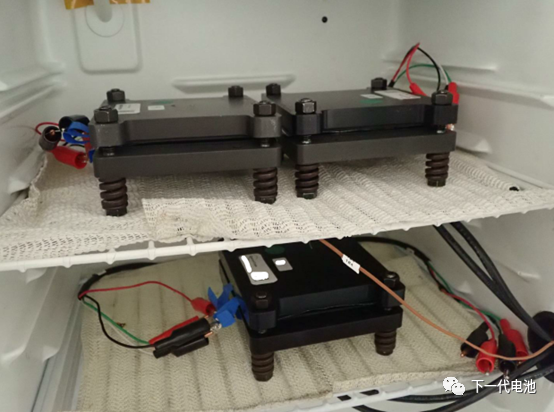
How to charging and discharging your Solid-State Batteries? Source: WeChat Official Account “Learn Batteries Together”  来源于微信公众号 一起学电池 Core Objective of Solid-State Battery Charge-Discharge Testing: To charge (lithium ions de-intercalate from the cathode and intercalate into the anode) and discharge (lithium ions de-intercalate from the anode and intercalate into the cathode) the solid-state battery under controlled conditions, while recording key parameters such as voltage, current, time, and temperature.   Key Prerequisites for Solid-State Battery Charge-Discharge Testing: Battery Preparation: Ensure you have a fully assembled solid-state battery (coin cell, pouch cell, or cylindrical cell). This typically comprises the cathode, solid-state electrolyte (SSE), anode, current collectors, and the casing. Testing Equipment: A battery

Battery Electrolyte (LiPF6)

Lithium-ion battery electrolyte 2026 post

Lithium-ion battery electrolyte I. Overview of Lithium-ion Electrolytes Electrolyte is one of the four key materials of a lithium-ion battery (alongside the cathode, anode, and separator). Often referred to as the “blood” of the battery, it serves the critical role of conducting ions between the positive and negative electrodes. It is the fundamental guarantee for lithium-ion batteries to achieve advantages such as high voltage and high specific energy. Generally, the electrolyte is prepared under specific conditions by mixing high-purity organic solvents, electrolyte lithium salts (such as Lithium Hexafluorophosphate, LiPF6), and necessary additives in precise proportions. Organic solvents constitute the bulk of the electrolyte and are closely linked to its overall

Sodium Ions

5 Minutes to Learn Sodium-ion Battery Testing: Electrical and Safety Performance

5 Minutes to Learn Sodium-ion Battery Testing: Electrical and Safety Performance I. Sodium Ions (Na+) A sodium ion is a sodium atom that carries a single positive charge due to the loss of one electron. Sodium ions play a vital role in both the natural world and biological life. For instance, they serve a critical function within cells, helping the human body maintain fluid-electrolyte balance and facilitate nerve impulse transmission and other physiological processes. Beyond biology, sodium ions are widely utilized in industrial applications, such as the development of sodium-ion batteries and as electrolytes in lithium-ion batteries, demonstrating their broad technological significance. II. Electrical Performance of Sodium-ion Batteries Compared to

NMC811

Using NCM811 as an example, How to make lithium-ion battery cathode electrodes?

How to make lithium-ion battery cathode electrodes? Typical formulation example (using NCM811 as an example) Core Objective: To uniformly mix the active material, conductive agent, and binder and firmly coat the mixture onto the current collector (typically aluminum foil), forming a stable thin layer with excellent electronic/ionic pathways. Electrode Preparation Flowchart Translation Material Weighing (Active material / Conductive agent / PVDF powder) Accurate Weighing Binder Dissolution (PVDF + NMP stirring) Complete Dissolution Slurry Mixing (Conductive agent + Active material mixed) Uniform Mixing Current Collector Preparation (Aluminum foil cleaning, drying, cutting) Aluminum Foil Treatment Coating (Doctor blade method on aluminum foil) Doctor Blade Coating Primary Drying (Vacuum oven to remove solvent)

Lithium Plating

Lithium Plating in Lithium-ion Batteries: Causes and Manifestations 2026

Lithium Plating in Lithium-ion Batteries: Causes and Manifestations I. Why Does Lithium Plating Occur? In simple terms, when the anode cannot promptly accommodate or intercalcate lithium ions migrating from the cathode, these ions “pile up” on the surface of the anode and are reduced into metallic lithium. As this deposited lithium continues to accumulate, it evolves into lithium dendrites. These dendrites typically manifest in four distinct morphologies: whisker-like, mossy, dendritic (tree-like), and spherical.   The main causes can be categorized into two major groups: operating conditions and battery states. 1. Operating Conditions (External Factors) Low-Temperature Charging: This is one of the most common causes. At low temperatures: The diffusion rate