Neware Battery Testing System

NEWS

Home > News

Overview of the dimensions, disassembly, internal features and inactive components of the BYD 4680.

Detailed Explanation of BYD 4680 Cylindrical Battery Cell Design and Performance

The ever-increasing demand for large-size lithium-ion batteries from electric vehicles has driven the accelerated development of cell specifications with higher energy density and better pack efficiency. By the end of 2024, electric vehicles accounted for approximately 4% of the global passenger vehicle fleet, and this is projected to quadruple by 2030. For automotive applications, LIB (Lithium-ion Battery) R&D revolves around cost, energy density, and power capability, while also considering safety and lifespan, resulting in various chemical systems, cell specifications, and integration solutions. EV batteries range from 18650 cylindrical cells (≈3 Ah) to large-size pouch and prismatic cells exceeding 100 Ah, each with trade-offs in cycle life, thermal performance, energy density,

Set up automatic backup in Neware BTS in 3 minutes

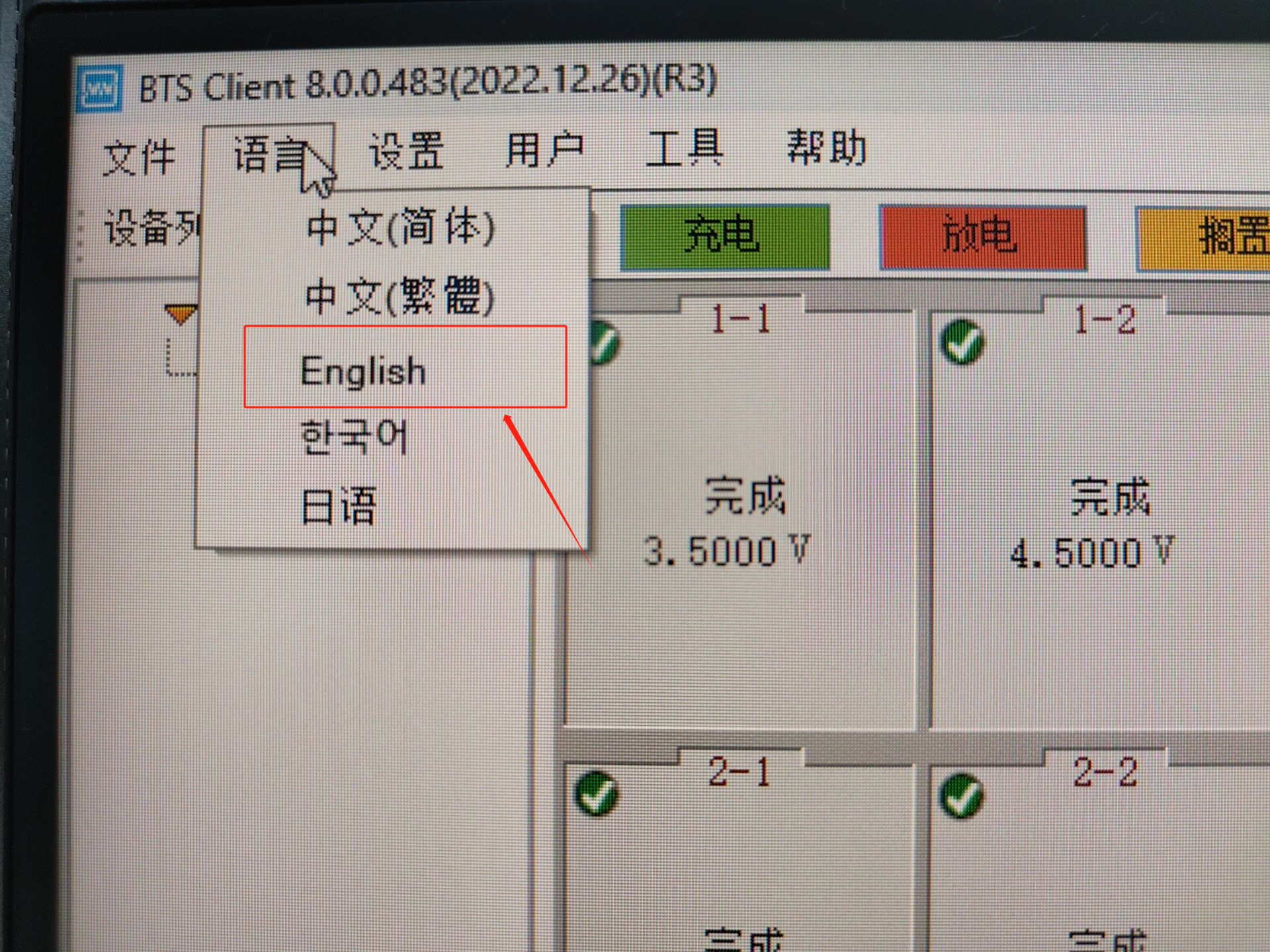
How to set up automatic backup in Neware software? Here is Neware Battery Cycler BTS Client 80 Automatic Backup Setting. 1. Open BTS Client—-Set—- System Settings 2. Download data—-Customize—-Customize file name 3. Customize file format 4. Customize Excel settings 5. Modify circular statistic method, Charge/discharge efficiency, platform voltage, or keep default setting 6. Start test page—-√ Automatic backup, modify backup file location and excel data format 7.Find the cloud icon, check backup program 8.If you want change backup program during test, modify is available Maybe you will be interested in these: Coin Cells: From Electrode Preparation to Performance Testing (1)    (2)     (3) 4 formulas for calculating the GITT

China’s first large‑capacity (60 Ah+ class) all-solid-state battery production line built by GAC Group

Recently, GAC Group‘s high-capacity all-solid-state battery production line, certified by CCTV, has generated significant excitement within the industry. What exactly constitutes the GAC solid-state battery architecture? The following content is compiled from publicly disclosed online information and is for reference only. Primary Sources of Information: 1. April 12, 2024: 2024 GAC TECH DAY (GAC TECH DAY 2024), themed “Science and Technology Horizon.” 2. November 21, 2025: The 23rd Guangzhou International Automobile Exhibition (2025 Auto Guangzhou). The GAC all-solid-state power battery leverages High Areal Capacity Solid-State Cathode Technology and the Third-Generation Sponge Silicon Anode Technology (a new nano-silicon composite anode). The all-solid-state electrode achieves an exceptional areal capacity of>5mAh/cm2, with a

Battery Manufacturing

2025 New Idea for Battery Manufacturing: A Simple Press to Accelerate Electrolyte Wetting

New Idea for Battery Manufacturing: A Simple Press to Accelerate Electrolyte Wetting Press & Wet: A “Sponge-Inspired” New Strategy for Pouch Battery Electrolyte Wetting In the manufacturing process of lithium-ion batteries, electrolyte injection and wetting is an often-overlooked yet crucial step. The electrolyte must fully penetrate the separator and the interior of porous electrodes to form stable ion-conducting pathways, providing an efficient and safe operating environment for the battery. However, the electrolyte wetting process is typically extremely slow—even in automated production lines, it often takes 24 to 48 hours to complete. This not only severely slows down the production rhythm but also significantly increases manufacturing costs. A research team from

GITT

4 formulas for calculating the GITT diffusion coefficient

Here are 4 formulas for calculating the GITT diffusion coefficient in NEWARE‘s software. GITT is Galvanostatic Intermittent Titration Technique. Here is a brief explanation of the meaning and application scenarios of these four formulas, and the basic principles of GITT: GITT measures how the voltage (potential) of an electrode/cell changes with the amount of charge (lithium ions, for batteries) inserted/extracted—but with intermittent “rest periods” to minimize polarization (distortions from rapid charging/discharging). How It Works 1. Galvanostatic Step: Apply a constant current (galvanostatic) to the cell for a short time. This drives ions (e.g., Li⁺) into or out of the active material, changing its state of charge (SOC). 2. Rest Period:

A ductile solid electrolyte interphase for solid-state batteries

Another “Nature” about battery: A ductile solid electrolyte interphase for solid-state batteries Solid-state lithium metal batteries are facing huge challenges under practical working conditions. Even when the ionic conductivity of composite solid-state electrolytes is increased to 1 mS cm−1, it is still difficult to realize long-life cycling of solid-state batteries above a current density of 1 mA cm−2 and an areal capacity of 1 mAh cm−2 (ref.). The fundamental cause is the brittle nature of the solid–electrolyte interphase (SEI) with sluggish lithium-ion transport and the resulting lithium dendrites and severe side reactions. Here we report a ductile inorganic-rich SEI that retains its structural integrity while allowing easy ion diffusion at high current densities and areal capacities.